




Best LED Lights for Growing in Small Spaces


- 1. Led vs light bulbs
- 2. Photosynthetically active radiation (par)
- 3. Photosynthetic photon flux density (ppfd)
- 4. Recommended ppfd for autoflowers
- 5. Light efficiency
- 6. The best led grow lights for small spaces
- 7. In conclusion
If you’re a new grower or are looking to update your light fixture for your 60x60cm space, you’ll see that there aren’t as many choices as you’d like. There are a lot of “blurple” LEDs that aren’t actually very good or claim to be something they’re not. This is because most companies focus on making LEDs for big commercial operations, leaving feminized seed growers with limited options. When shopping for an LED in 2026, you should look for several characteristics to make sure that it really is what you’re looking for. To help you decide what light fixture to buy, read along for the best cost-effective lights and what you should look for when shopping for a good-quality LED for small grow spaces.
1. LED vs Light Bulbs
Light bulbs are perhaps the most popular light amongst indoor growers, and this has been the case for years and years, but for a couple of years now, LEDs have evolved a lot and become extremely popular, and best of all, affordable. Both of these lights will produce very good yields, but LEDs have an advantage over bulbs because they don’t emit much heat and are much more efficient, which saves you money in the long run. Also, LEDs are built to last at least 50.000 - 100.000 hours or more while bulbs last a maximum of 10.000 hours but the downside is that LEDs go for $100 to $1000 whereas you can find bulbs for as little as $50, so if you’re planning on buying an LED there are a couple of things that you should have in mind, such as the Photosynthetically Active Radiation (PAR), Photosynthetic Photon Flux Density (PPFD) and light efficiency.
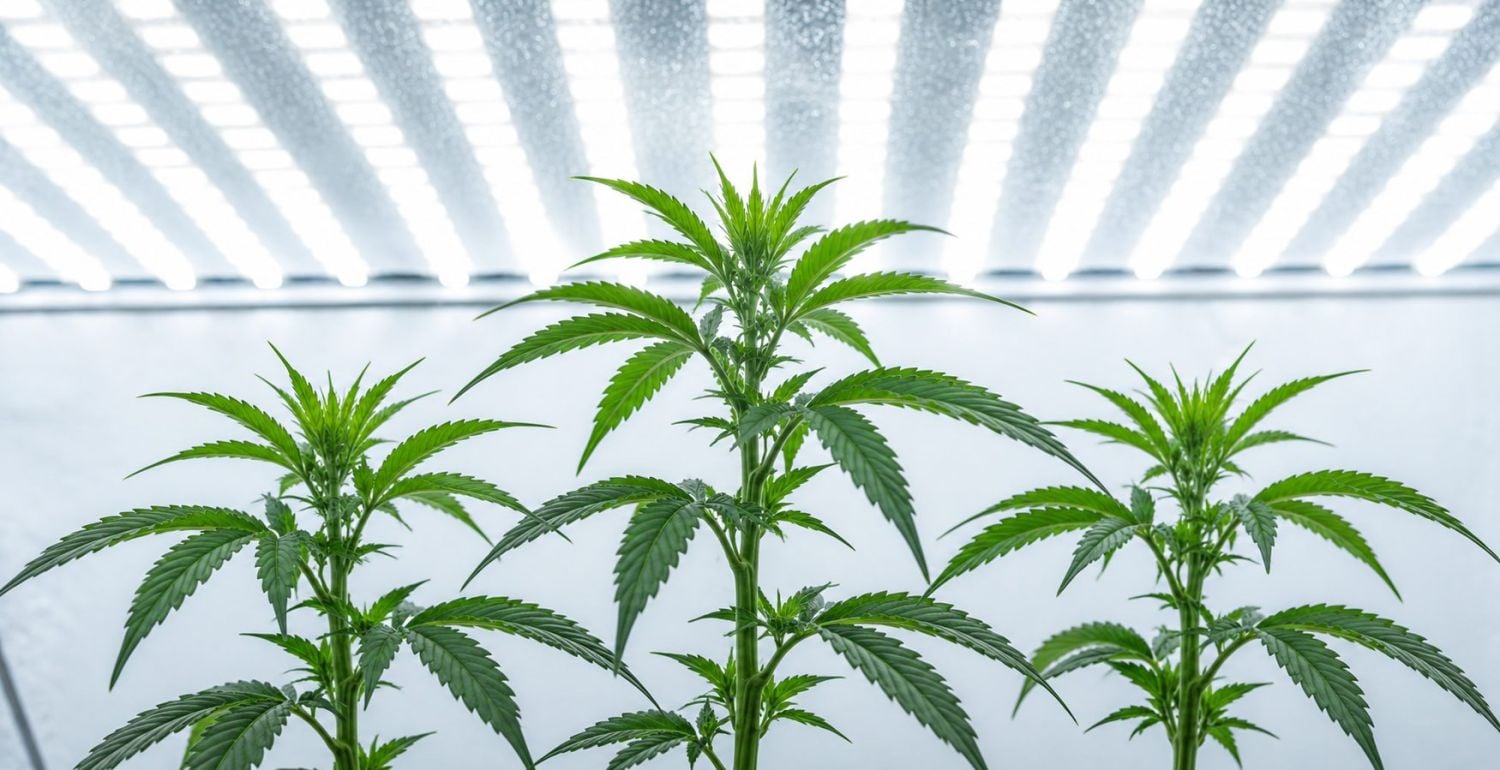
Overall, LEDs provide a host of advantages over many other forms of light. These benefits make them one of the most popular lighting options among cannabis cultivators. Compared to HID (high-intensity discharge) lights, they are far more energy-efficient. For cannabis growers, this means reduced electricity costs—a factor that can make their hobby much kinder to their bank account. Next up, many models also boast customizable spectrums. Why is this important? Because instead of buying different lights that emit different colored wavelengths, you can simply adjust the settings on a single light.

Using a switch or dial, you can change the wavelengths that your light produces depending on the plants you're growing or the stage of the growing cycle they are currently in. Here’s another benefit to add to the list: lower heat emission. Not only does this add to the overall efficiency of LED lights, but it helps to prevent the phenomenon of heat stress in plants, which occurs when they grow slightly too close for comfort.
2. Photosynthetically Active Radiation (PAR)
When buying an LED, one of the most important things you should look for is the amount of actual light your plants will be able to use, and this is where PAR comes in. PAR basically refers to the wavelengths that plants predominantly use to perform photosynthesis, which range in the blue range from 400-500nm and in the red range from 600-700nm; As you may know, plants are green because they don’t actually use the 500-600nm wavelengths, so the unused light gets reflected from the leaf, and that’s why they appear green to us.
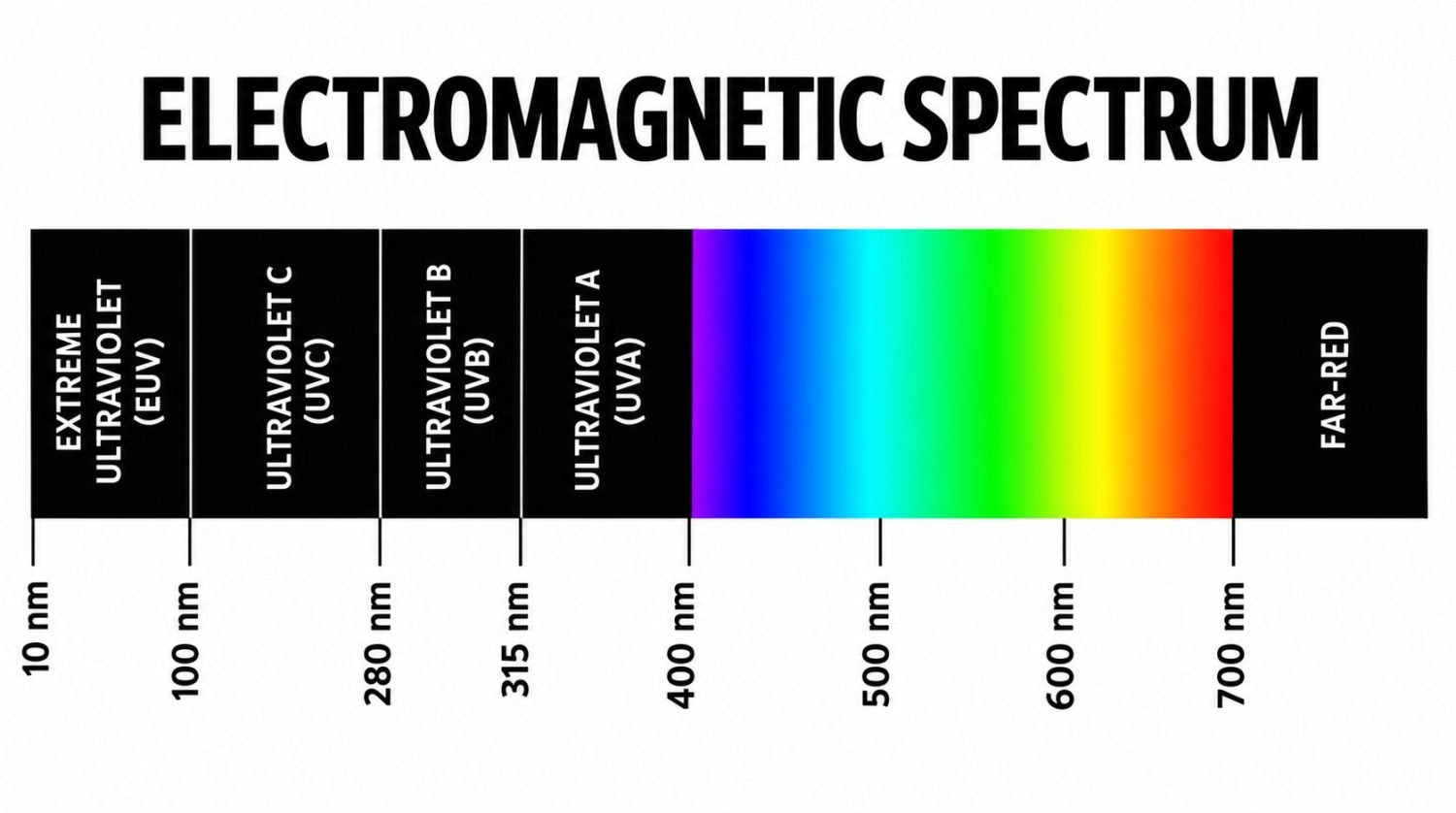
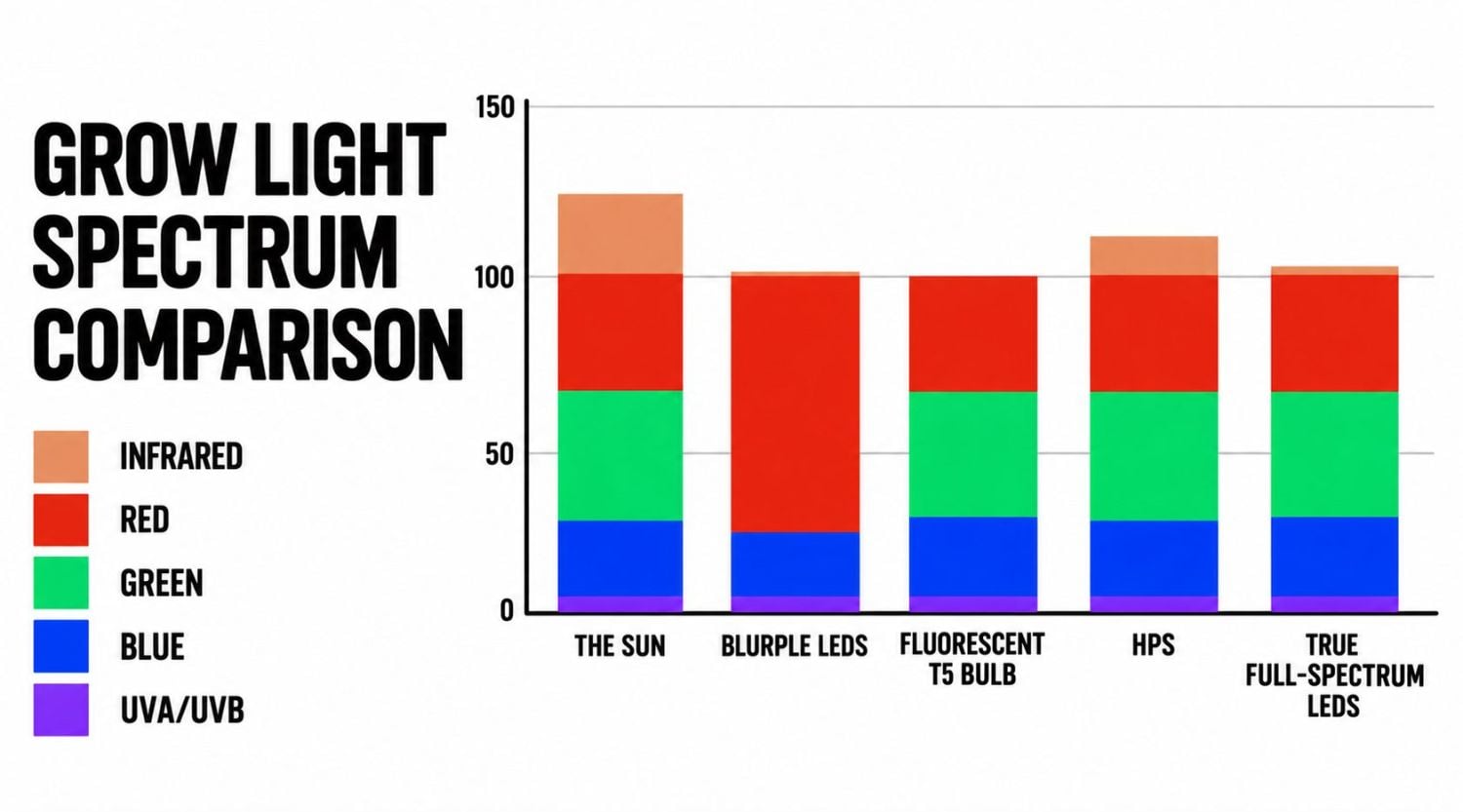
You’ll get even better results if the light fixture you’re planning on buying also emits a little bit of the spectrum outside of the 400-700nm (UVA/UVB and far-red spectrum) because UVA/UVB increases trichome production and far-red increases bud density, so when shopping for an LED, you should look for a truly full-spectrum fixture that generates the desired PAR (if possible).
But if you cannot find a truly full-spectrum fixture or can’t afford it, don’t worry, as long as the PAR output is good, your plants will develop as you’ve never seen before.
Having said that, remember that PAR is not a measurement of the amount or intensity of light, but rather refers to the range of wavelengths that plants can use for photosynthesis. This means that a particular LED fixture may emit the wavelengths that plants need, but not necessarily at the intensity they require. Therefore, once you have confirmed that an LED fixture provides the wavelengths your plants need, you should focus on its Photosynthetic Photon Flux Density (PPFD), which measures the amount of photosynthetically active light reaching a given area per second.
3. Photosynthetic Photon Flux Density (PPFD)
As mentioned above, apart from knowing the type of light your plants will be getting, you also need to know the intensity of the light so the PPFD (which is measured in μmol x m2 x second) will tell you exactly how much PAR falls on 1m2 in one second.
| Recommended PPFD For Cannabis Plants | |
|---|---|
| Stage | PPFD µmol/(m2s) |
| Seedling Stage | 100 - 300 |
| Vegetative Stage | 400 - 600 |
| Flowering Stage | 700 - 1000 |
The PPFD is extremely important because, even if you are providing the correct PAR, a low PPFD can limit photosynthesis, and an overly high PPFD can end up damaging your plants. This is why, if you’re planning on using a high PPFD, it’s recommended to use a maximum of 1000 µmol/(m2s) without CO2. When PPFD is above 1000 µmol/(m2s), you will need to adjust the environmental conditions and ensure CO2 levels are above 1200 PPM.
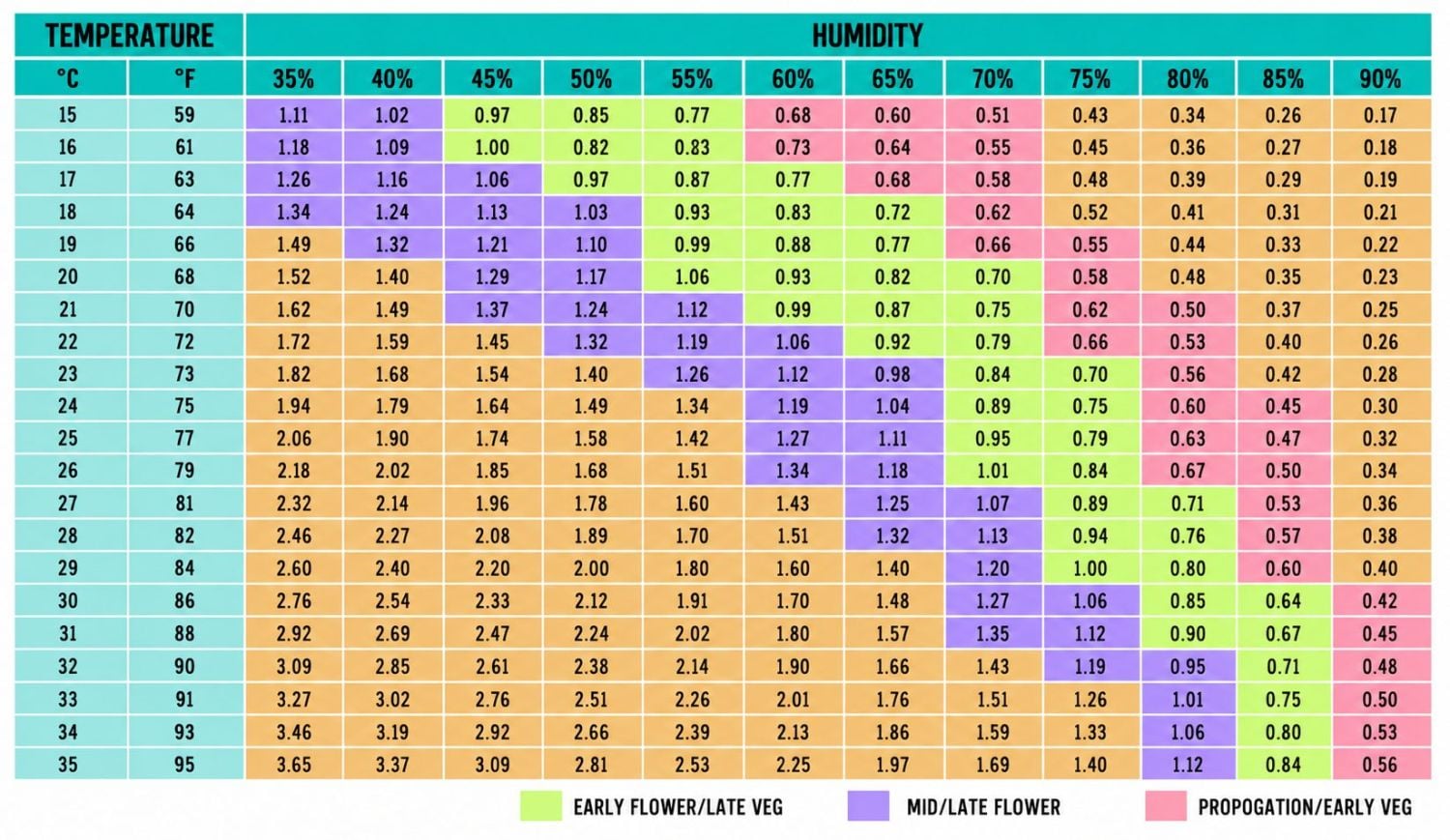
Obviously, if you’re growing in a 60x60cm grow space, you won’t have a lot of equipment and don’t need to worry about CO2 injection. Just make sure to provide optimal conditions (or as close as possible) to the ones shown in the chart above.
4. Recommended PPFD for Autoflowers
For autoflowers, the PPFD requirements are a bit lower. Now, there are some strains that might be more sensitive than others, so it’s a matter of experimenting to find the sweet spot, but in general, you can use the following table as a guideline for autoflowers.
| PPFD For Autoflowers | |
|---|---|
| Clones/Seedlings | 100 - 200 PPFD |
| Vegetative Stage | 200 - 500 PPFD |
| Pre-Flower | 500 - 600 PPFD |
| Flowering | 600 - 700 PPFD |
If you cannot measure the PPFD, then there are a couple of different ways to make sure your plants are getting enough light. Just keep in mind that a PAR meter is the best way to do so, as it’s way more precise than the methods we’ll see below. Anyways, if you want to have an idea of how much light you’re providing to your plants, you can download any LUX meter app and use it as a guideline. Remember that the precision of this kind of app depends on how good your smartphone’s camera is, but it will help you grow healthier plants and avoid light stress, which can be easy to cause, especially when using modern LED light fixtures.
So how do you use LUX meter apps? Actually, it’s really, really easy. All you have to do is download any LUX meter app you can find, preferably, filter out by reviews or downloads, and then just follow the table below in order to see if you’re providing enough light or not.
| Average Recommended LUX for Autoflowers | |
|---|---|
| Clones/Seedlings | 5000 - 7000 LUX |
| Vegetative Stage | 15000 - 50000 LUX |
| Flowering Stage | 45000 - 65000 LUX |
| Maximum recommended LUX | 75000 LUX |
And again, remember this is just a guideline and may vary according to your light fixture, specific strain, and grow setup. And keep in mind that when injecting CO2 into your grow space, you will have to provide strong lighting, as plants will need the extra light in order to effectively absorb CO2.
5. Light Efficiency
In most cases, the light manufacturer specifies the light equivalent to HPS but does not always specify the light efficiency. It’s essential to know exactly how efficient your light is because a higher efficiency means that a light fixture:
- Emits less heat;
- And consumes less power when compared to other LEDs.
To achieve this, the manufacturer has to use a good LED driver and a higher number of individual LEDs that run at a lower current, thus emitting less heat and increasing the fixture’s life. Those growing in smaller spaces usually want to keep things as stealthy and discreet as possible, so you should consider these things because, for example, if your fixture emits more heat, then you will need to run the oscillating fans or exhaust fans at a higher speed to remove that heat, which results in more noise and sometimes more smell due to the carbon filter not being as efficient when the exhaust is running at a higher speed.
6. The Best LED Grow Lights For Small Spaces
Now that you've read everything you needed to know before buying your next LED fixture, you’ll be able to know exactly what you’re paying for and if it’s worth it or not; multiple LED fixtures will perform really well in smaller setups, and multiple factors will influence your choice.
Starting from price to efficiency, all of these factors should be taken into consideration to make the best choice, but in the end, the most important thing is the efficiency because the higher the efficiency, the less money you will have to spend for each grow cycle while still getting the optimal lighting that you’re looking for despite the relatively high price point, obviously. As you may know, regular LEDs and light bulbs can also be used and will result in a really good harvest, but they’re no match for most of the good-quality LEDs on the market in terms of efficiency. Also, they do not emit a full spectrum, so if you’re growing with bulbs, you will have to change from a “blue” spectrum during the vegetative stage to a “red” spectrum during flowering, so starting with a good full-spectrum fixture not only saves you money but also time and effort.
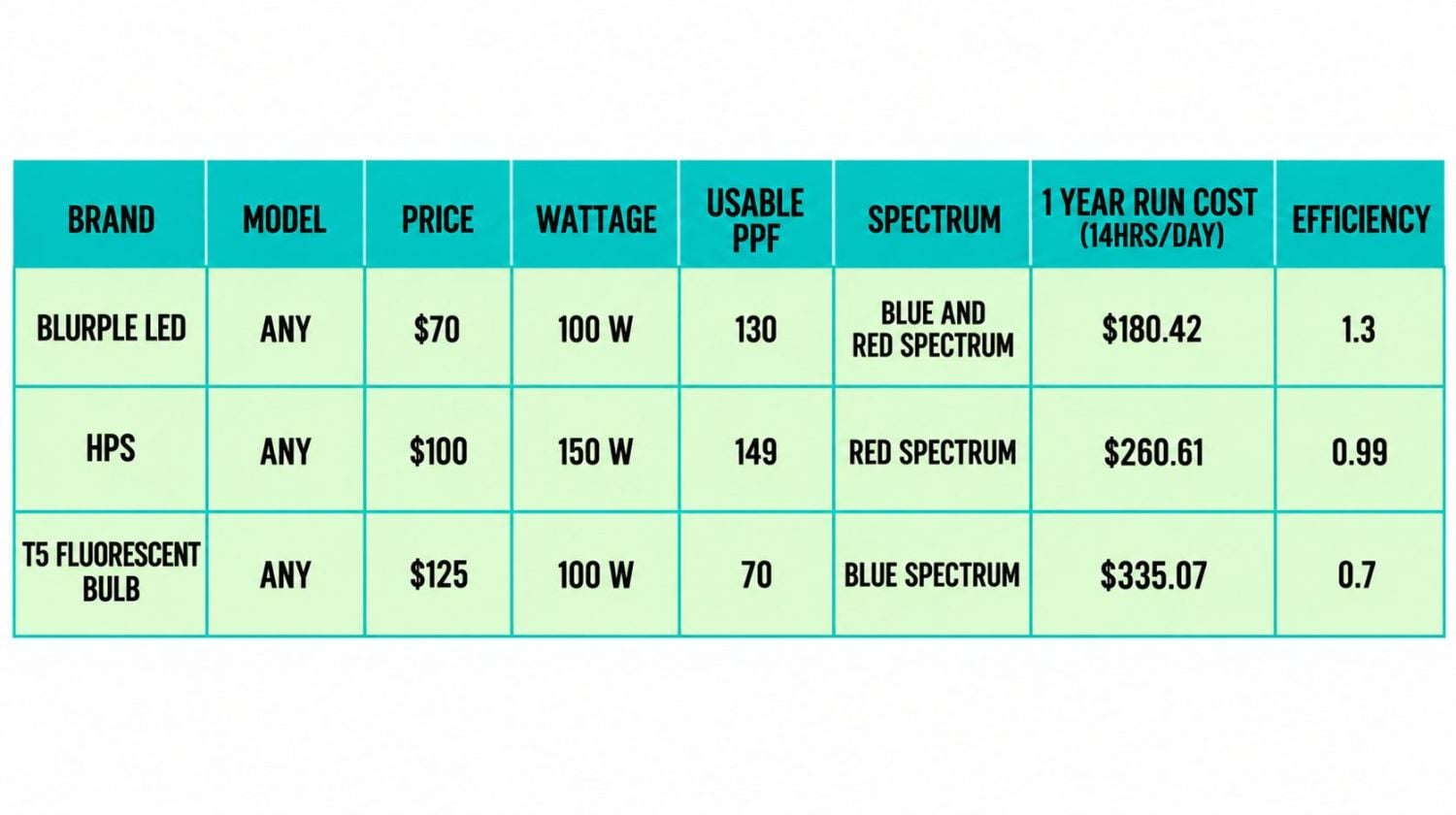
In the table above, you can see how much older LEDs and light bulbs consume, their efficiency, and the total usable PPF, which is nowhere near the values for more modern LEDS. Now, this doesn’t mean that you have to buy the most efficient LED you can find because it basically comes down to how much you can or want to spend, but you should definitely take all of these things into consideration. This way, you know you’re making a wise choice and won’t regret it once you’ve already bought your LED.
7. In Conclusion
You can definitely grow your own cannabis using any light fixture you can find or have available, but if it’s time to upgrade your grow setup or you’re a new grower and just want to start with a good LED, make sure you take all of the things mentioned into consideration. The lighting is one of the main things that will allow you to grow really good flowers, so it’s essential you make a wise choice!
If you have experience with any of the LEDs mentioned above or want to help fellow growers with some more information regarding LEDs, feel free to leave a comment in the comment section below!
External References
1. The best LED grow light 2021 for small spaces - Migro Lights
2. LEDs Light the Way for Indoor Farming. - Uddain, Jasim. (2021).
3. Innovative LED Lighting. - Hinov, Nikolay & Tsankov, Plamen & Ibrishimov, Hristo. (2019).
FAQ
Yes, regular bulbs can support healthy plant growth. However, LED grow lights are more energy-efficient, produce less heat, and can save you money in the long run.
Yes, dimmable LED grow lights are particularly useful in small growing areas because they allow you to adjust light intensity according to plant requirements. Lower brightness may be appropriate for young seedlings or shade-tolerant plants, while mature, high-light plants often need stronger illumination.
LED grow light panels typically provide concentrated illumination across a defined growing area, making them suitable for small grow tents and compact plant collections. LED grow light bars have a slim, elongated design that offers more uniform lighting and works well for shelves, narrow spaces, and vertical gardens. The best option depends on your layout and required light coverage.
Many quality LED grow lights are rated for approximately 25,000–50,000 hours of operation, although actual lifespan varies by product quality, temperature, and operating conditions. Their light output may gradually decline over time, so plants may receive less usable light even before the fixture stops working.
LED grow lights are ideal for small indoor spaces because they consume less electricity, produce relatively little heat, and come in compact designs. They also provide the light spectrum plants need for photosynthesis, making them suitable for growing herbs, vegetables, flowers, and houseplants in limited areas.
The appropriate LED grow light size depends on your growing area's dimensions and the types of plants you want to grow. For a 2×2-foot growing space, a quality 100–150-watt LED grow light may be suitable for many high-light plants.
Autoflowers require an 18/6 light cycle from start to finish, while photoperiods require 18/6 during the vegetative stage and 12/12 during the flowering stage. Using a timer allows you to maintain a consistent schedule.
While, yes, LEDs emit some heat, they generally produce less radiant heat than traditional HID grow lights, making them suitable for compact growing environments. However, they still generate heat, especially at higher wattages, so proper ventilation and adequate spacing help prevent overheating and maintain healthy growing conditions.
While sunlight is considered better, LED grow lights can replace natural sunlight indoors. Full-spectrum LED lighting provides wavelengths needed for photosynthesis, allowing plants to grow in rooms, apartments, and other spaces with limited natural light. However, the light must provide adequate intensity and coverage.
The ideal distance depends on the LED grow light's intensity and the manufacturer's recommendations. Many compact LED grow lights are positioned approximately 6–18 inches (15–45 cm) above plants, while more powerful fixtures may require greater distances. The best way to determine the optimal distance is to measure PPFD levels.
Comments