




Lemon Cherry Cookies Auto: Pollination Setup & Parent Selection
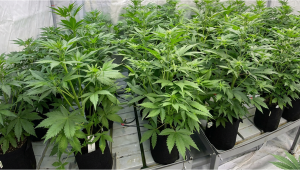
The video starts by showing the selected female plants of a Lemon Cherry Cookies following the previous update. At this point, everything is being prepared for pollination. The females are already showing clear signs that they are entering the correct window to start receiving pollen, while the selected males are approaching full maturity and are about to release it.
From the original 160 base specimens, we are now working with 96 selected females. This number is still subject to further refinement, but it already represents a significant reduction in variability compared to the initial population.
For this run, male selection was carried out from a group of 28 representative candidates, resulting in four selected males that will be used for pollination. The main objective of this generation is to homogenize color and structure. All four selected males show clear expression of dark purple traits and share a very similar overall structure, which is essential at this stage of line development. Lemon Cherry Cookies Auto has shown a naturally compact growth pattern from the early generations.
Starting from this generation, we aim to slightly increase overall plant size by selecting individuals that are taller and more robust, without losing structural balance. This direction is driven mainly through female selection. The selected female plants will be primarily responsible for defining terpene profile and color expression, while the male side ensures structural consistency and genetic stability across the population.
Why use four males instead of one? At the stages from f3 in advance, the goal is no longer exploration. The goal is fixation with control. Using a single male across all females may create fast and apparent uniformity, but it also creates a severe genetic bottleneck, increasing the risk of inbreeding depression and the fixation of hidden weaknesses. On the other hand, using too many males would reintroduce unnecessary variability and dilute the direction already established in earlier generations. The real stability is defined by the population. level
Comments