




What Is Micro Growing Cannabis?


- 1. Cannabis growing conditions
- 1. a. Differences
- 2. Main requirements
- 2. a. Lights
- 2. b. Ventilation and air exchange
- 2. c. Nutrients
- 2. d. Appropriate pot size
- 3. Choosing the strain
- 4. Plant training
- 5. In conclusion
G
Growing your own feminized seeds has been gaining a lot of popularity in 2026. People who can’t find good-quality flowers or don’t want to deal with dealers are starting to grow their own cannabis. Even though it may seem super hard and expensive, setting up your own growing space doesn’t have to be difficult or expensive at all. You can grow like a pro indoors, even in smaller spaces.
A micro cannabis grow consists of a scaled-down version of a traditional grow tent, with the main difference being the amount of space available. This results in a fully functional indoor growing space that can fit in a small closet, a homemade grow box, or even smaller spaces like a computer case or a cupboard.
1. Cannabis growing conditions
Just like in all other growing setups, you will have to provide a good environment for your plants to grow. This can be a bit hard when dealing with small spaces, but it’s not impossible.
For your plants to grow properly, you will need to provide and maintain a specific range of environmental conditions for each stage.
| Optimal Environmental Conditions for Cannabis | ||
|---|---|---|
| Stage | Humidity | Temperature |
| Seedling | 75 - 85% | 23–29°C (73–84°F) |
| Vegetative | 70% | 21–26°C (70–78°F) |
| Flowering | 40-50% | 15–21°C (60–70°F) |
Additionally, you need to make sure the light cycle is appropriate for the type of cannabis you’re growing. That means 18 hours of light for autoflowers from start to finish, and for photoperiod plants during the vegetative stage, and a 12/12 light cycle for photoperiod strains during the flowering stage.
This means that, despite being smaller, the growing space needs to have everything a normal-sized growing space has. So you won’t need to spend as much, but you still need the basics.
Differences
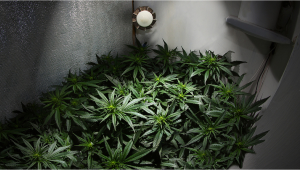
There isn’t a big difference when growing in a small space. Obviously, you’re limited by the space you have available, so you’ll have to choose the genetics wisely and perform plant training, but other than that, it’s basically the same.
The challenge when micro-growing cannabis is to be able to provide and maintain a good growing environment for your plants. This can be difficult when growing in small spaces, but it’s not impossible. You most likely won’t get it right the first time, but after making minor adjustments, it will work like a charm.
3. Main requirements
Providing the needed amount of all these elements is crucial if you want to have a successful harvest. You will not need to spend too much or buy super expensive equipment, but remember that when growing indoors, you are responsible for controlling the environment your plant grows in, so these things are obligatory.
Micro growing setups are usually homemade. It doesn’t really matter the material or size of the grow box as long as you provide everything your plant needs, and that is:
Lights
Light is a key element in plant growth. Obviously, you won’t need a high-intensity light fixture, but you will need to provide the appropriate amount of light for your plants to develop.
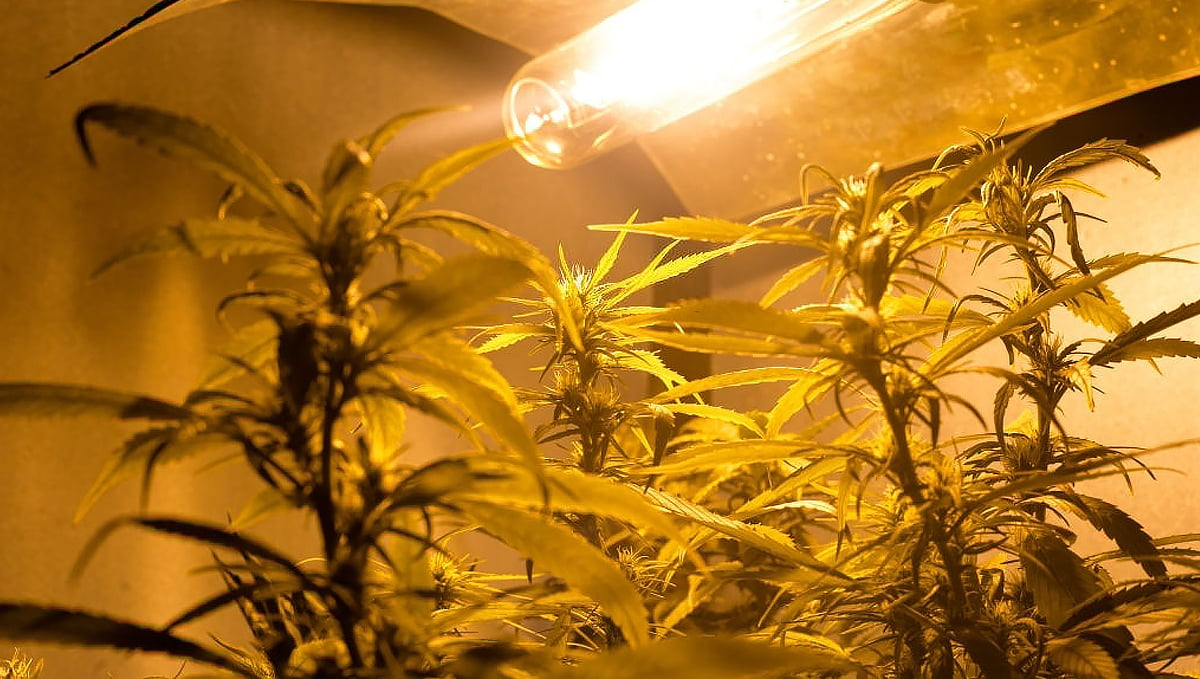
You cannot grow cannabis without light. That’s a fact. It doesn’t matter what kind of light you use, whether it's an LED or a light bulb. Now, light bulbs emit heat but can be near the plants, while LEDs don’t emit much heat but can bleach your plants if they’re too close to the plants, so depending on the growing space, you will have to choose one or another.
Because of the limited space, you won’t have a lot of plants, so you can also use fluorescent tubes and CFLs, but remember to provide at least 400w per m2 and have in mind that when using light bulbs, you have to use white lights in the vegetative stage and yellow lights during the flowering stage. Almost all LEDs are full-spectrum, so you won’t need to worry about this if using LED fixtures.
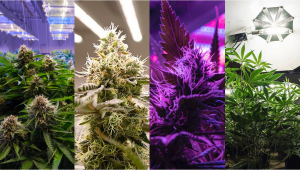
It’s essential you provide a wide light spectrum if you want to get dense buds, so make sure you take extra caution before buying the lights. A common query when designing a micro grow is where exactly the lighting should be placed. Traditional grow rooms have the main light fixtures placed directly above the plants, with auxiliary lights sometimes added in various places throughout the grow room.
Since micro grows are often short on space, this traditional method may not be the best option. If you are going to grow in a tall vertical space with a small footprint, it may be better to hang your light alongside the plant. This can be done on one side, but if possible, it is better to cover multiple sides of the grow compartment with light sources. This helps with light distribution and penetration through the entire canopy and can help combat any stretching issues you may encounter when lighting from above only.
Ventilation and Air exchange
As said above, plants need CO2 to perform photosynthesis. There are around 400PPM of carbon dioxide in the air we breathe, so there’s no need to provide more than what’s already available, but you will need a way to exchange air.
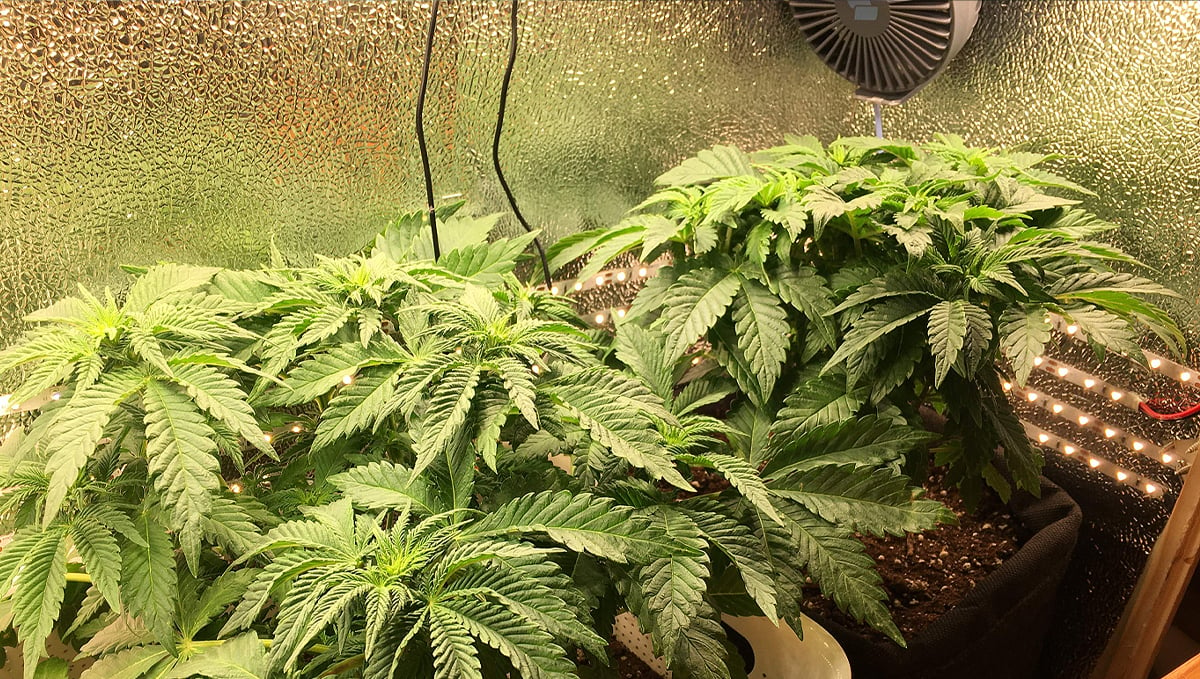
Because the space is limited and you don’t need and can’t fit an exhaust fan, you can achieve this just by having the door open or a couple of holes for the air to naturally circulate. This way, you avoid having problems.
You will also need a small fan to help the air circulate. This will not only help exchange air but can also prevent bugs and make your plant’s branches and stem stronger.
Nutrients
Plants need macro and micronutrients to grow properly, if the medium is sterile and you don’t feed your plants, they will start to show nutrient deficiencies and can stop growing at all.
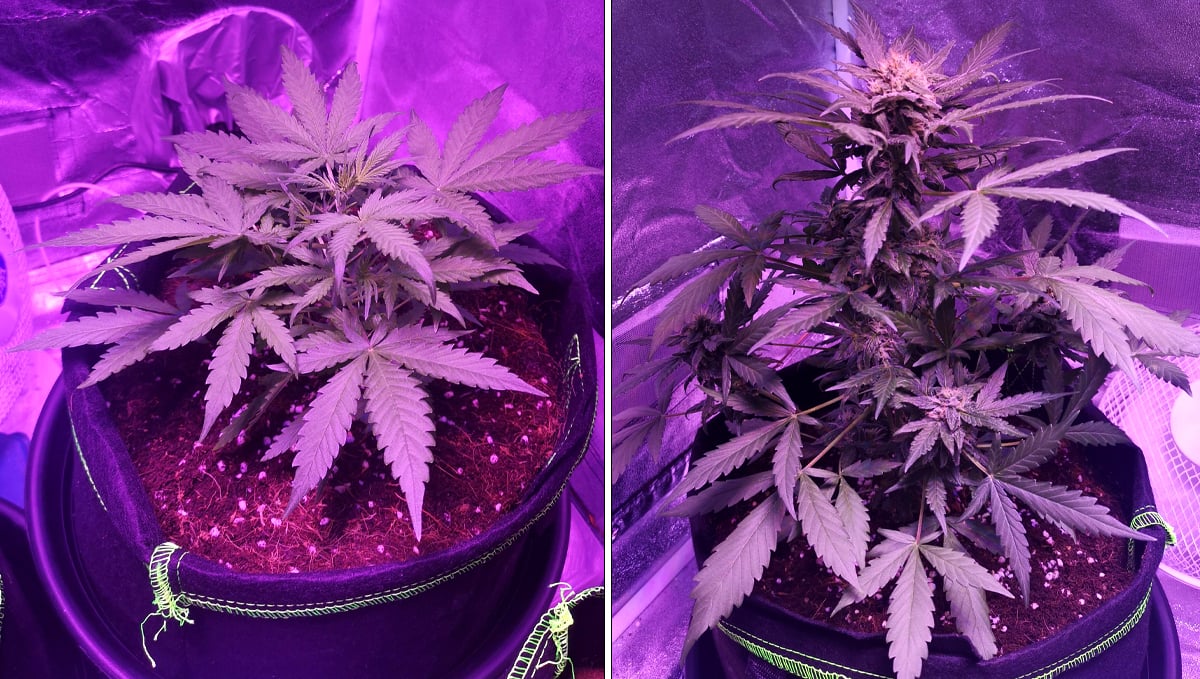
Because the pots are usually smaller and contain a smaller amount of soil (or the medium of your choice), you will have to water more often and maybe divide the nutrient dose you would give once into two or three. This will help your plant absorb it more easily because the medium can only hold a limited amount of water.
Appropriate pot size
As you may know, the size of a plant is a reflection of the size of the roots, so using smaller pots is necessary in smaller growing spaces. Because the pot is smaller and will have less medium, you will have to water and feed more frequently.
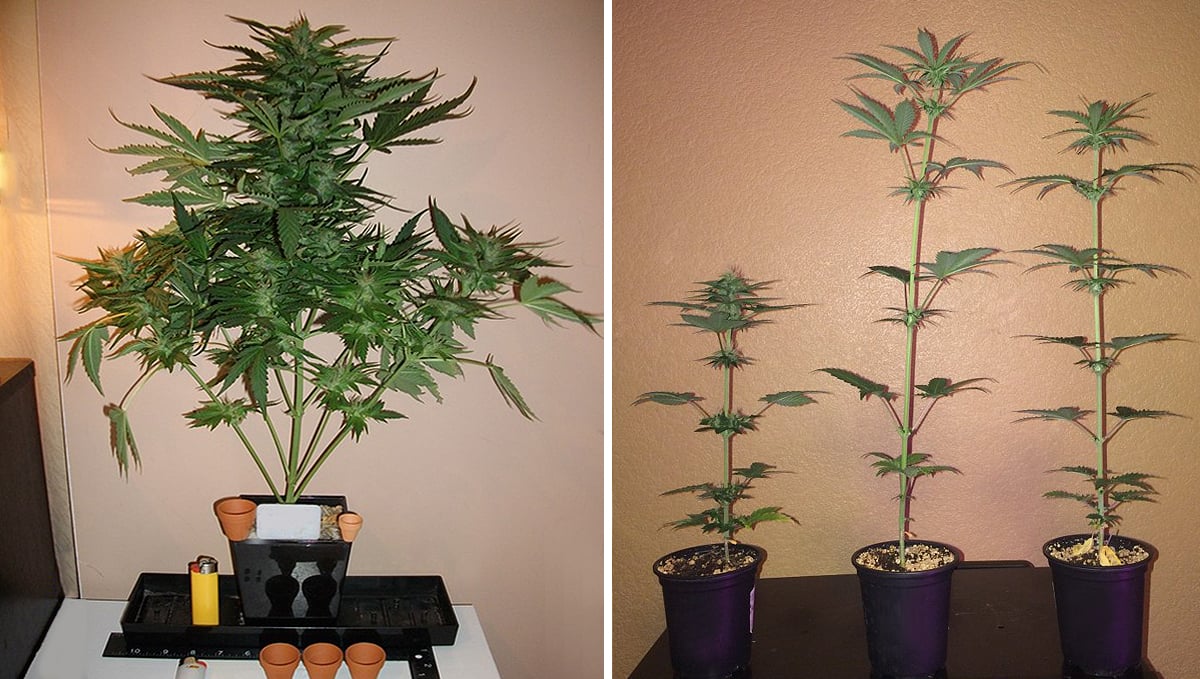
Even though the size can vary from strain to strain, here's a chart to help you have an idea of the approximate plant size for smaller pots:
| Pot size | Plant height |
|---|---|
| 1/2 L | Up to 60- 70 cm |
| 1L | Up to 100 |
| 2L | Up to 120 cm |
This will also keep the branches shorter but depending on the strain, your plant can develop a lot of branches that you will have to control with plant training techniques if needed. The figures shown in the table above are just a general guide. Exact plant sizing will be dependent on which strain to type you opt to grow, and which growing techniques you implement. For micro grow setups, pots no larger than 2 to 3 liters are recommended. Some growers prefer to use larger pots and grow fewer plants, but a good general rule of thumb for maximizing yields in small grow areas is to go with more plants in smaller pots.
4. Choosing the strain
Because of the limited space, you will have to choose the right genetics so you don’t have a problem further into your plants' growth cycle.
In this type of setup, autoflowering strains are ideal, although some strains grow taller than others, so you have to be careful and pay attention to the information the breeders give.
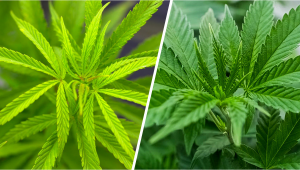
For example, if your growing space is tall and narrow, you’ll be better with Sativa-dominant strains. Sativas grow tall and skinny and are better for this kind of grow space, whereas Indica-dominant plants grow short and bushy and are better suited for shorter and relatively wide.
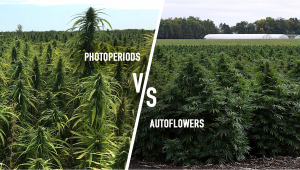
Sativa-dominant strains are known to increase in size by up to 200 to 300% during the flowering stage, whereas most Indica-dominant varieties show increases in size closer to 65 to 130%. Certain Autoflowering strains are great for micro growing as they can be grown under multiple light schedules, with some strains having a tendency to stay small and compact.
5. Plant training
When growing cannabis in a limited space, plant training is essential. There are a lot of plant training techniques that not only allow you to control the size your plant will have and even out the canopy but also help improve yields.
In small growing spaces, there are a couple of growing techniques that are recommended:
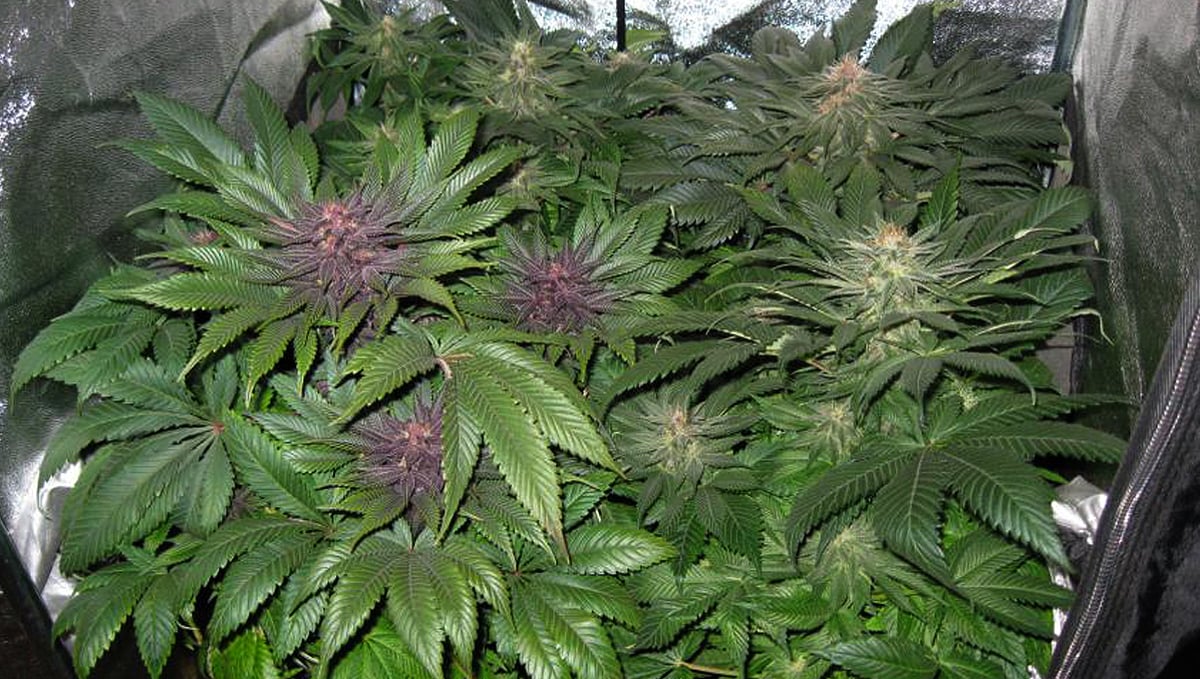
Tying down branches
The tie-down method is fairly easy, but you won’t be able to grow more than 2-3 plants in a limited space. This is because tying down the branches allows you to control the height by training your plant to grow to the sides.
You can also use high-stress training techniques like topping or fimming, but to effectively perform these techniques, you need a bit of experience. HST techniques are not recommended with autoflowering strains but can be used with photoperiodic cannabis, so you have to know what you’re doing so you don’t risk your harvest.
Scrog
Screen of green (aka Scrog) consists of having a trellis net on top of your plants. This will not only allow you to control height but will also open up the branches so your plants have more airflow in the buds and also allows the light to reach deeper.
Sog
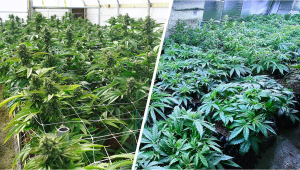
A sea of green (aka Sog) is the most appropriate technique for this type of cannabis grow. It consists of having a lot of plants, growing small and not producing too much individually, but will add up to a lot after harvesting all of them.
The plant training method you use will depend on the space you have, remember you don’t have to use just one, you can combine (for example) the Scrog method with the tie-down method to reach the desired height and structure. Keep in mind that auto-flowering plants tend to struggle with any aggressive plant training. High-stress training can halt vegetative growth for a few days, all the way up to a week or more. These techniques are fine for photoperiod plants, as they can be forced to stay in the vegetative stage by keeping the light schedule to 18/6.
Autoflowering plants have an inbuilt timer, with the vegetative stage usually lasting 5 to 6 weeks before they automatically start flowering (hence the name autoflower), no matter what light schedule they are grown under. Be sure to treat autoflowering plants like the princesses they are, keep any stress training to a minimum, and handle them with the care they deserve!
6. In conclusion
You can grow cannabis in any space as long as you provide the basic elements a plant needs; it doesn’t matter if it’s a huge or a tiny growing space.
If you have experience with this type of growing, please feel free to share your tips and tricks in the comment section below!
FAQ
The size of your growing space doesn’t necessarily make cultivation more difficult. If you understand the basics of cannabis growing, you can grow high-quality weed even in a limited space. However, if you lack the knowledge or experience to train your plants and keep them healthy, growing in a small space can be challenging. Ultimately, the difficulty comes down to your growing skills and ability to care for your plants rather than the size of your setup.
While the ideal lighting setup depends on the size and layout of your growing space, LED grow lights are generally the best option for micro grows. Modern LEDs have become increasingly popular among cannabis growers because they produce less heat than traditional HID lighting systems.
Because space is limited in micro grows, managing heat is especially important. LEDs make both tasks easier, making them a practical and efficient choice for growers working with smaller setups.
Ventilation is essential in any indoor growing environment, but it's particularly important in micro grows. Because of the limited space, heat and humidity can build up quickly, while poor air circulation can create conditions that encourage mold and pest problems.
To prevent these issues, you'll need some form of passive or active ventilation to maintain proper airflow and exchange stale air for fresh air. Depending on your setup, this could be as simple as a small computer fan combined with ventilation openings or a more advanced system with an exhaust fan and ducting. The key is to maintain consistent airflow without allowing excessive heat or humidity to accumulate.
If your micro-grow space can only accommodate one plant, that's perfectly fine! Growing a single plant allows you to focus your attention on its development without worrying about overcrowding.
When choosing a strain, consider factors such as plant size, growth characteristics, and available space. Compact autoflowering varieties may be worth considering.
The best cultivation method depends on your experience, available space, and personal preferences. Hydroponic systems can offer excellent control over nutrient delivery and growing conditions, but they often require additional equipment, maintenance, and space.
For beginners or growers who prefer a simpler setup, soil-based cultivation is generally the more straightforward option. A growing medium containing approximately 30% high-quality soil, 30% coco coir, 20% compost, and 20% perlite can provide a balance of moisture retention, drainage, and aeration.
When it comes to maximizing yields in a limited space, several factors can influence the final results. Lighting and ventilation are particularly important, as both help maintain a suitable growing environment.
It's also essential to provide balanced nutrition, monitor environmental conditions, and keep your growing area clean. Regularly inspecting your plants can help you identify potential problems early, while good hygiene reduces the risk of pests and diseases. Ultimately, healthy plants = “healthy” yields.
It's difficult to give an exact figure because the final yield depends on several variables, including genetics, plant size, lighting, environmental conditions, and the grower's experience.
As a rough reference, a healthy, small/medium-sized plant may produce around 28–56 grams (1–2 oz) of dried flowers under favorable conditions.
Comments