




Fast Buds Germination Guide



- 1. Our fail-proof germination method
- 2. Troubleshooting seed germination
- 2. a. Failed germination
- 2. b. Legginess/stretchy seedlings
- 2. c. Weak stems
- 2. d. Nutrient burn
- 3. In conclusion
After years of germinating, growing, breeding, and experimenting with thousands of cannabis seeds, we’ve found this to be one of the easiest and most effective germination methods. Get the best tips and tricks directly from the breeders themselves with our 2026 foolproof cannabis seed germination method.
Our Fail-proof Germination Method
Germination is just as important as every other stage of the growing process, and just like with everything else, you want to start off on the right foot. While this isn’t the only way to germinate seeds—and there’s no single “correct” or “best” method—this is the approach we’ve found to minimize risk and maximize success.
It’s the same method we use in our own facilities and the one we recommend to growers. So, let’s get started!
First, fill a small glass with room-temperature water (75–80°F / 23–27°C). Tap water is perfectly fine, provided the pH is between 5.5 and 7.0.
Carefully place your Fast Buds seeds on the surface of the water using a spoon to avoid touching them directly with your fingers, as your hands might be dirty or covered in bacteria.
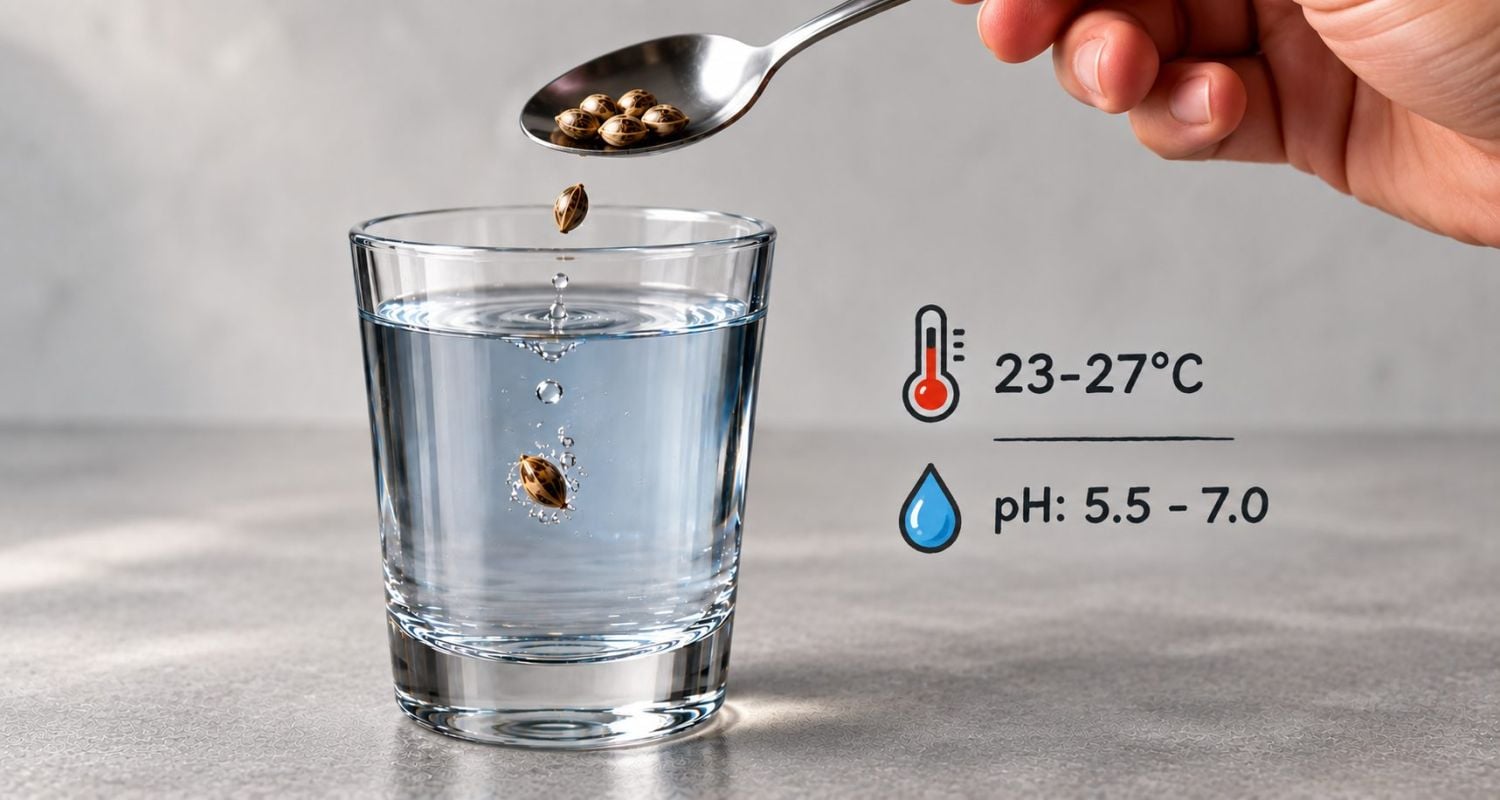
The seeds should initially float and then sink after a few hours.
This method can be particularly useful for seeds with tough outer shells or for helping to “wake up” older seeds that have been stored in refrigeration for more than a year. Keep in mind that if the seeds were in a refrigerator, you should wait at least 12- 24 hours for them to get to room temperature before starting the germination process.
Next, place the glass in a completely dark location at 68–77°F (21–25°C) and leave the seeds undisturbed for 2–3 days, or until they begin to germinate and you see a taproot coming out.
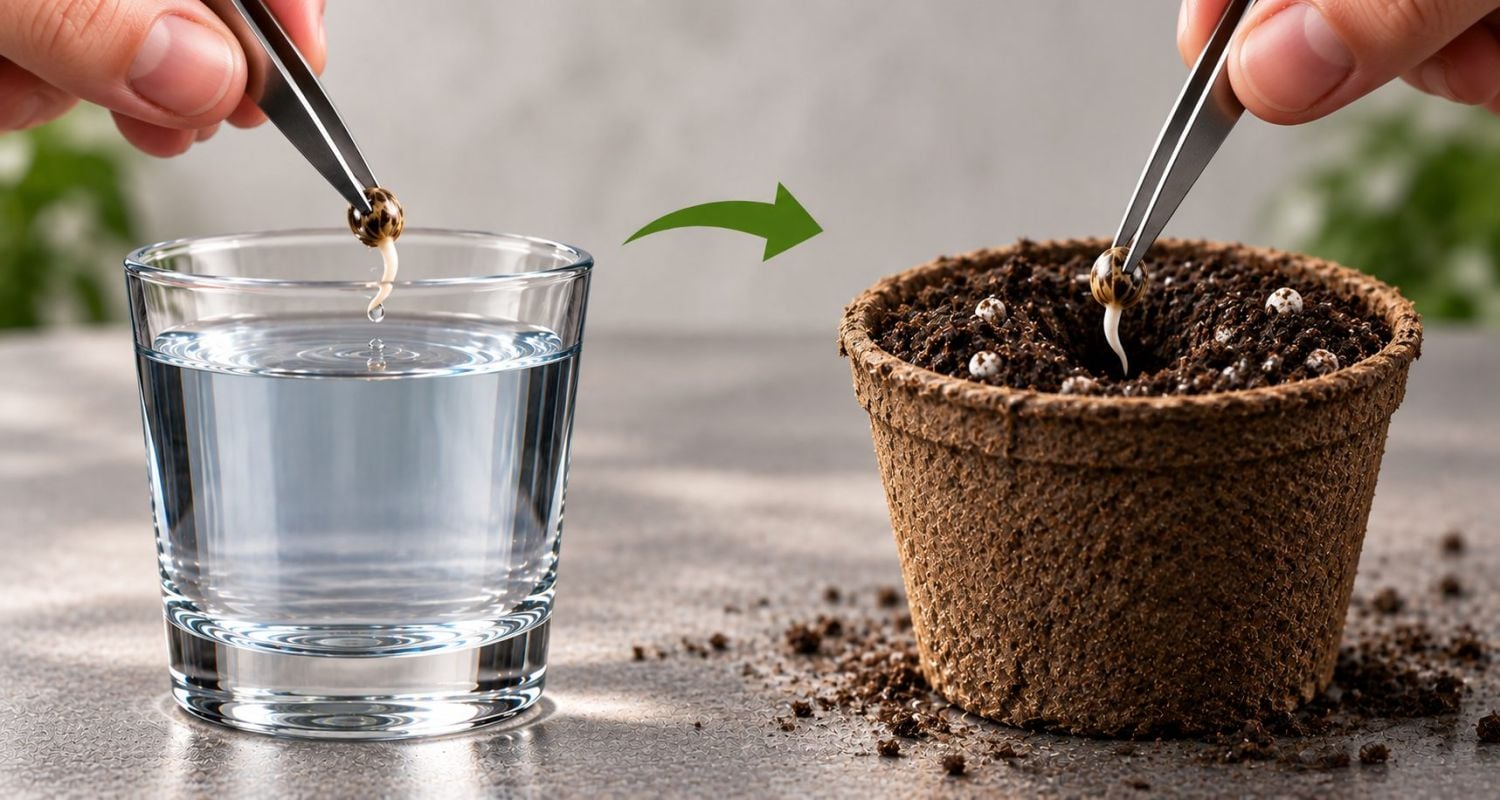
If they are not germinating after 72 hours, you can add a few drops of hydrogen peroxide and return to the darkness for 2 more days. Once you see a tiny “tail” extending out 1 centimeter, the seed is ready to come out of the water.
However, if there are no signs of a taproot after 48 hours, transfer the seeds to damp paper towels for a few more days. The taproot should appear within 2–3 days.
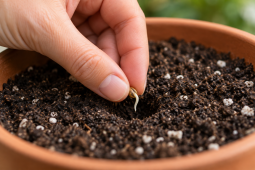
With a pair of tweezers, carefully plant the cracked seeds a couple of centimeters deep (1- 3 cm), with tails pointing down, then cover with soil and lightly pat it down. Once buried, spray water right on top of each seed, and keep it moist and dark until the seedling emerges from the substrate.
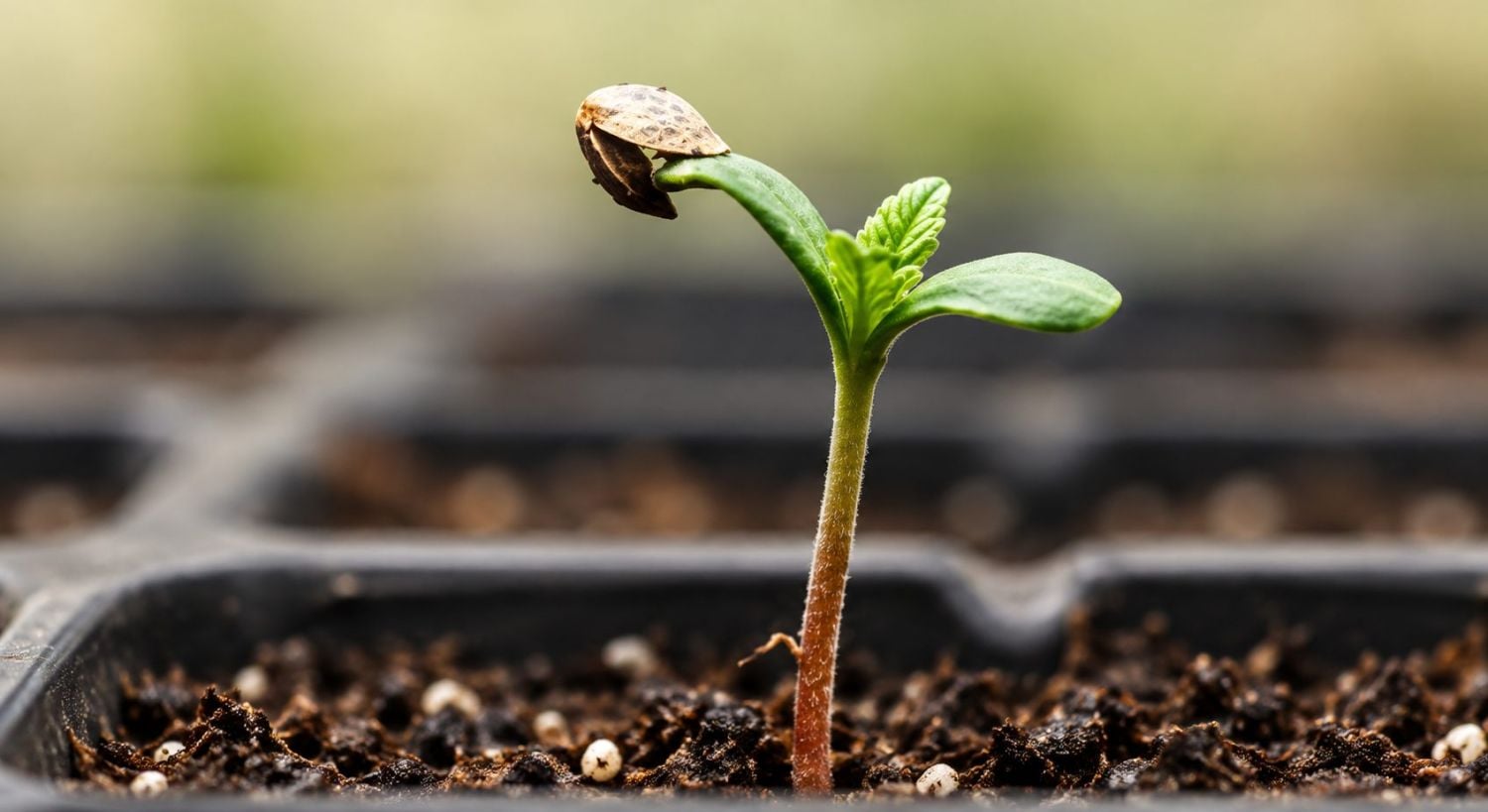
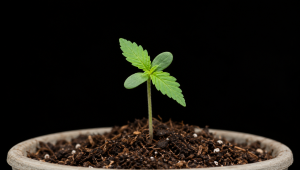
Once the seedling emerges, maintain a temperature between 21–29°C (70–85°F) and a relative humidity of 70–80%. Very soon, the seedling will begin growing towards the light, and that marks the beginning of the vegetative stage!
Troubleshooting Seed Germination
So, now you’re equipped with an incredibly efficient and reliable way to germinate seeds. However, things don’t always go to plan. Therefore, what good would a germination guide be without some troubleshooting tips? While germination refers to the emergence of the taproot from the seed, germination and the rest of the seedling phase are intimately connected. Below, you’ll discover what to do when germination fails, and how to correct common problems with your seedlings in the critical days after germination ends and seedlings begin to establish themselves. Grab a notebook, brew a cup of coffee, and prepare to deepen your cannabis knowledge in a way that will save you a lot of time and effort in the future.
Failed Germination
Sometimes, seeds simply just don’t pop. Several factors can cause this disappointing event to happen. Firstly, you need to make sure that you have mature seeds that aren’t too aged. Seeds harvested too early will have a greenish appearance, whereas seeds that are too old will appear dark brown/black and will easily become crushed when squeezed between your thumb and index finger. Healthy seeds are firm, brown, and have a healthy sheen to them. If you’re direct sowing, you might experience failed germination due to your growing medium drying out. You can avoid this by soaking seeds in a glass of water first for 12–48 hours.
Legginess/Stretchy Seedlings
During the first couple of days following germination, you might notice your seedling becoming overly long. Known as legginess, this is caused by growth hormones within plants fuelling growth in a desperate attempt for adequate light intensity. To avoid this, you should use a strong lamp that provides enough light intensity. You can measure this variable using either a lux meter or a photosynthetically active radiation (PAR) meter.
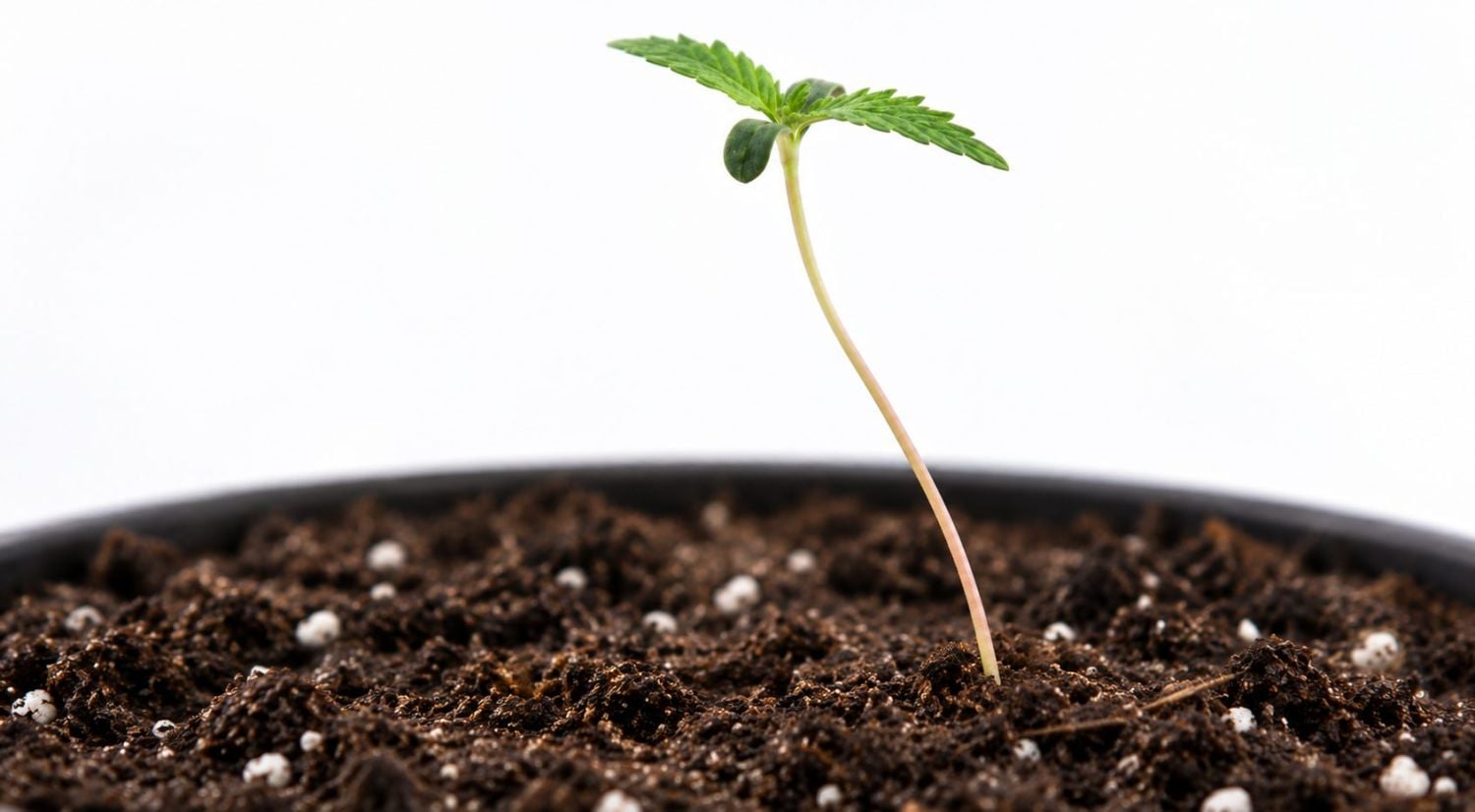
You should start running your lights as soon as shoots begin to emerge from the soil, and ideally, keep them on for 24 hours a day during the first week and use an 18/6 light cycle once the first pair of serrated leaves appears.
Weak Stems
Growing indoors exposes cannabis to a synthetic environment. Outdoors, plants are subject to the elements, including wind. This forces them to develop vigorous stems and expand their root systems into the ground in order to anchor themselves down. To avoid weak stems, you should set up some fans within your growing space to gently blow across your seedlings—just don’t blast them too hard!
Nutrient Burn
Sometimes, seedlings may show signs of nutrient burn right from the start. This can be a serious problem, as it usually means that the pre-fertilized substrate is too “hot” for the young seedling.
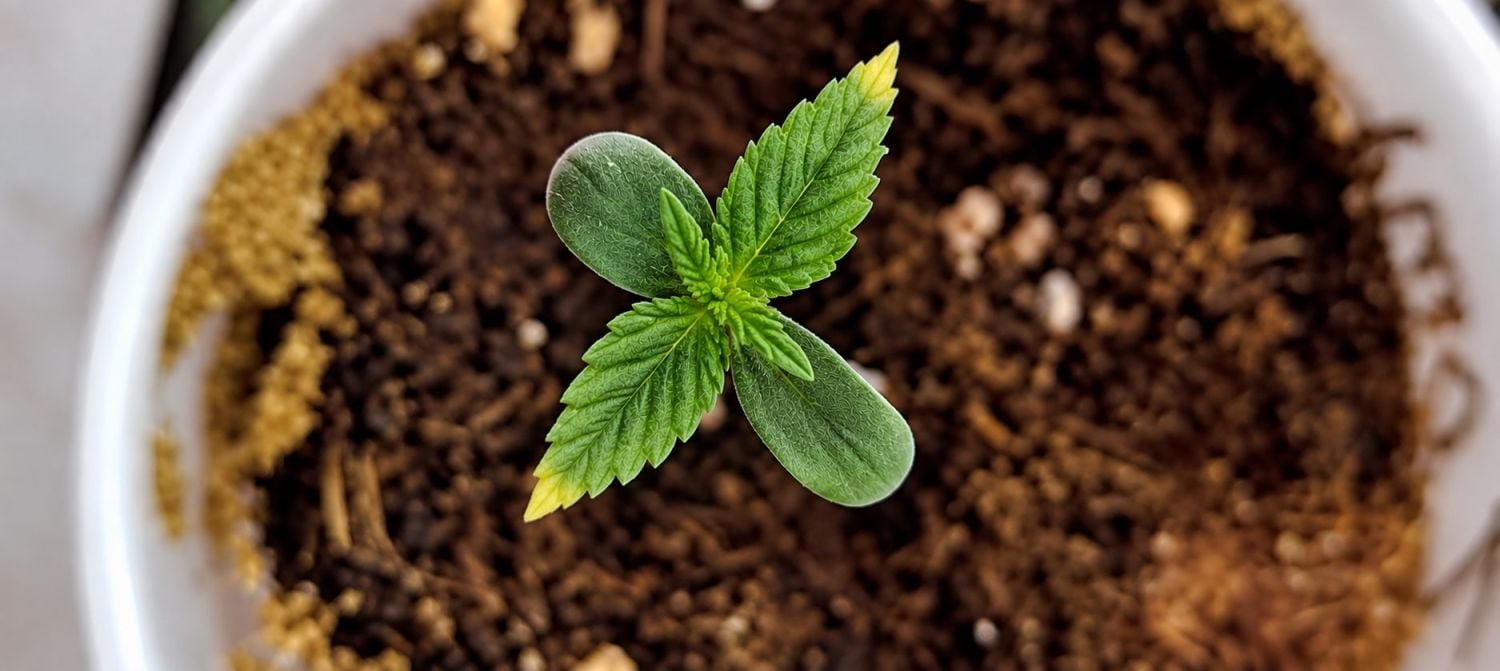
In cases like this, there’s not much you can do because the nutrients are already present in the soil, and flushing may cause even more nutrients to be released. To minimize the problem, use as little water as necessary around the base of the seedling. This helps limit the amount of nutrients released from the surrounding substrate while giving the seedling time to grow and become better able to tolerate the nutrient levels.
Keep in mind that this approach isn’t guaranteed to work, as some plants are more sensitive than others. However, it can give the seedling the best chance to recover and continue growing.
In Conclusion
While every tip and trick can increase your chances of successfully germinating your seeds, high-quality seeds are essential if you want to achieve the best results possible. This applies not only to the quality and viability of the seeds themselves but also to the genetics of the strains you’re growing, which can directly influence the health of your plants and the quality of your harvest.

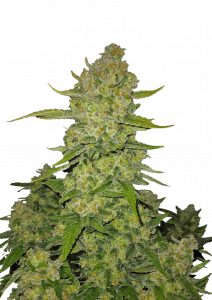
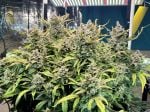
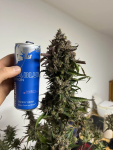


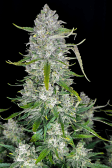

Resilient strains that can thrive even under less-than-ideal conditions, such as Papaya Cookies Auto, can give you an advantage right from the germination stage. Their resilience can help plants withstand common growing challenges throughout their entire life cycle, from germination all the way to harvest.
FAQ
No. Seeds contain enough stored energy to support the earliest stages of growth. Strong nutrient solutions are generally unnecessary during germination and may stress or burn young roots. If you’re growing in a pre-fertilized substrate, make sure to leave a small area in the center filled with unfertilized soil or coco. This allows the taproot to reach the nutrient-rich substrate only once it has grown large enough to handle it.
Sometimes, the seed coat may still be slightly dry and remain attached after the seedling emerges. To help prevent this, soak the seed in water for 24–48 hours before planting and maintain adequate moisture and humidity throughout the germination process. Proper moisture levels will help soften the seed coat, allowing it to loosen and fall away naturally.
A tall, weak, or stretched seedling often indicates that it isn't receiving enough light. Once seedlings emerge, providing suitable light will encourage stronger growth.
Yes, tap water can work well for cannabis seeds gemrination. However, make sure to check the EC and pH of your tap water, as extremely hard water or water with an unsuitable pH may require adjustment or an alternative water source.
Yes. Soaking seeds for 24- 48 hours helps hydrate the seed and soften its outer shell. However, it isn't obligatory. Also, remember that seeds shouldn't be left submerged for more than 48 hours.
Seeds often float when first placed in water because air is trapped around or inside the seed coat. Floating by itself isn't necessarily an indication that a seed is nonviable. Viable seeds will sink after a few hours in water.
It's best to minimize handling, especially once the root has emerged. If you need to move a germinated seed, handle it carefully and avoid touching the delicate root.
The appropriate pH depends on the growing medium. However, when talking about soaking seeds in water, the acceptable pH range is 5.5 - 7.0.
Most viable seeds germinate within 2–7 days, although some may take longer depending on the variety, age of the seed, and environmental conditions.
Seeds generally prefer warm and stable conditions. A temperature range of approximately 23–29°C (75–85°F) with a relative humidity of around 75–85% is recommended.
No. Cannabis seeds don't require light to begin germinating. However, once the seedling emerges from the growing medium, it should receive appropriate light to support healthy development.
Some seeds are simply slower than others. If conditions are suitable, give the seed up to 10 days before deciding that it is unlikely to germinate.
The growing medium should be moist but not soaking wet. Too much water can reduce oxygen around the seed, while too little moisture can interrupt germination.
As a general rule, seeds should be planted relatively shallowly; a depth of approximately 1–3 cm is generally recommended.
Comments