










How to Grow Cannabis Indoors: a Beginners guide - 2026 (Part 1)


- 1. Step #1. set up your cannabis grow space
- 2. Step #2. select your cannabis grow lights
- 2. a. Fluorescent grow lights
- 2. b. Hid grow lights
- 2. c. Led grow lights
- 3. Step #3. choosing the right genetics
- 4. Step #4. give your cannabis plants good conditions
Congratulations! If you’re reading this in 2026, that means you’re ready to grow your own cannabis seeds, that’s a significant step. Once you get all the stages of growth, you’ll hardly find yourself buying cannabis plants ever again. Growing cannabis indoors needs a lot of effort, unlike growing outdoors, which only requires the sun, water, and Mother Nature. This is because when growing indoors you basically are mother nature, when growing in a grow tent, for example, you will have to control and adjust the growing conditions so your plant thrives and you get the best results possible.
The growing conditions include light, temperature, humidity, substrate, and nutrients so it's essential that you are able to control these elements so you don't get an overwhelming harvest or end up killing your plants. To do this properly it's essential you read a bit or gather knowledge online so you don't end up wasting time and money because it can be too much for the first-timers. Growing cannabis indoors can be overwhelming for beginners. However, with our simplified beginner's guide, you’ll quickly understand every step to help you get started as a first-time-grower.
Step #1. Set up Your Cannabis Grow Space
The first initiative in setting up your cannabis growing space is by designing the appropriate room. Remember, this room or space doesn’t have to be classy; it can be in any room, be it a cabinet, closet, or any unused room. All you need to keep in mind is to customize your requirements to fit in the space.
Typically, we recommend starting small as a beginner because of the following reasons:
-
Smaller grows are much affordable to set it up
-
It’s simple to observe and control a few cannabis plants
-
Your mistakes will be less costly as a first-time cannabis grower
So think about how many plants you want to grow now, and how many you’d want to grow in the future, and make sure you choose a place where you can expand your garden if you wish to. Also, when measuring and creating your room, you should keep in mind other requirements, including the lights, fans, ducting, and any other equipment required. When cannabis plants stretch, they can double or even triple in size, so ensure you have enough vertical space in your room, at least 140 - 160cm but ideally 200cm in height or more.
You’ll also need to spend some time considering the location of your growing room or tent. If you live in a region where it’s legal to grow weed, and you don’t care who comes across your crop, then you can happily cultivate weed in any room of your house. However, if laws and other factors require you to take a stealthier approach, then you’ll need to opt for an attic, cellar, or room where people are much less likely to enter.
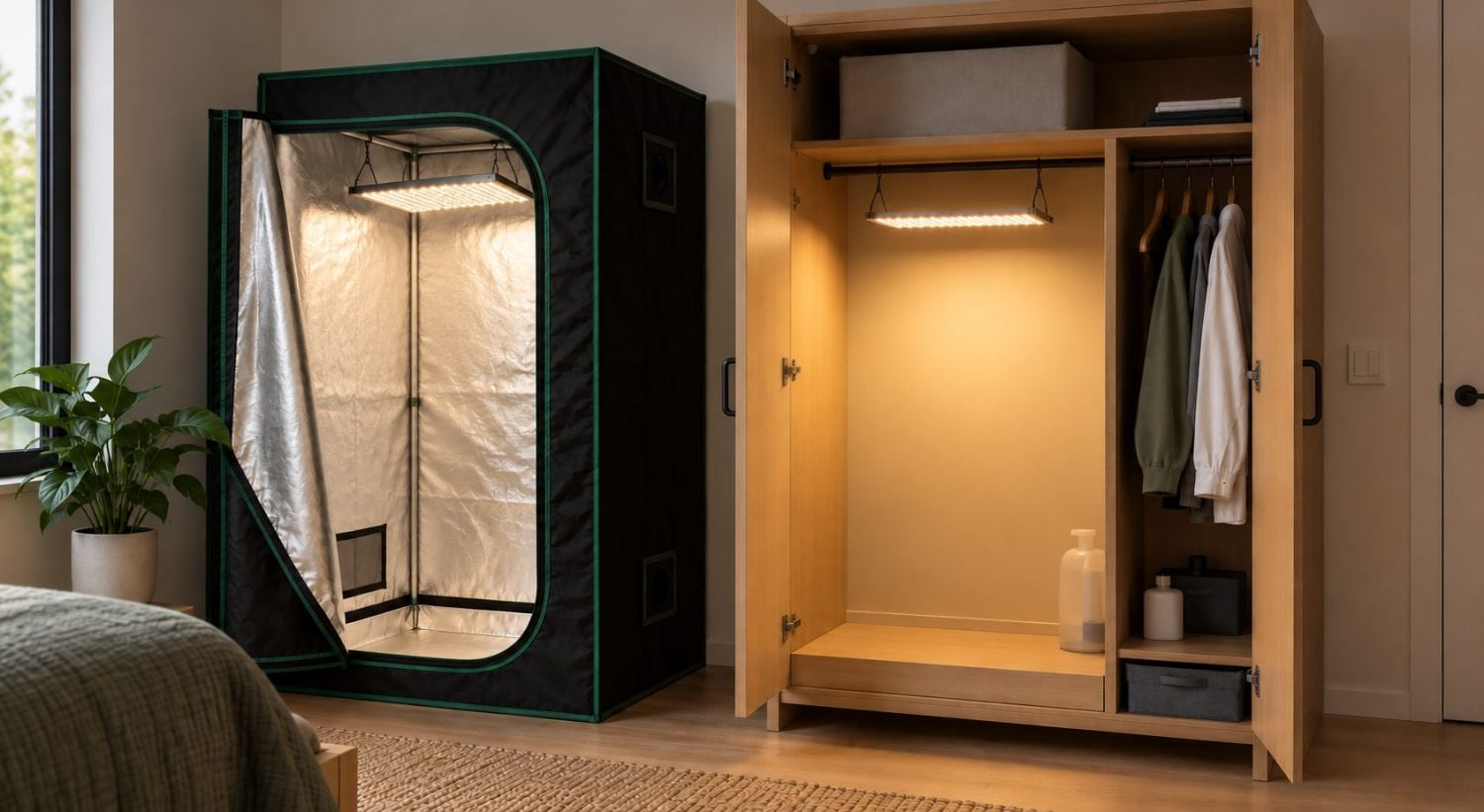
Next, you need to think about your goal. Most beginner growers simply want to watch a single plant grow from seed to flower to get a taste of the experience. To achieve this, you’ll only need a small 40x40cm or 60x60cm grow that can easily fit in the corner of your room, or even within a walk-in closet. If, however, you're looking for bigger yields in order to secure a larger stash or to get enough buds to make extracts, you’ll need a bigger space.
Ensure that your growing room is thoroughly sanitized. Cleanliness is vital when growing cannabis indoors; therefore, an easy-to-clean surface is essential. Avoid difficult-to-clean surfaces as much as possible such as carpeting, raw wood and drapes. There are three things to keep in mind when deciding where to grow your cannabis:
-
Convenience. Be sure to observe your cannabis plants carefully. Examining them every day is essential; for newbies, they need to check them many times a day till they have everything running smoothly.
-
Humidity and temperature conditions. If your cannabis growing space is very warm, this is not a favorable condition, and you might have a hard time controlling your plants. It’s typically recommended to have a cool, dry space with access to fresh air from outside.
-
Stealthiness. Make sure to choose a spot where the rowdy fans won’t draw any unpleasant attention.
Step #2. Select Your Cannabis Grow Lights
With no sun to rely on, you’ll need to provide light to your cannabis plants. The quality of light in your grow space is the number one factor to put into consideration. If you want quality cannabis yields, it’s essential to choose the best lighting setup. While there are many options to choose from, knowing which one is the best can be overwhelming.
Fluorescent grow lights
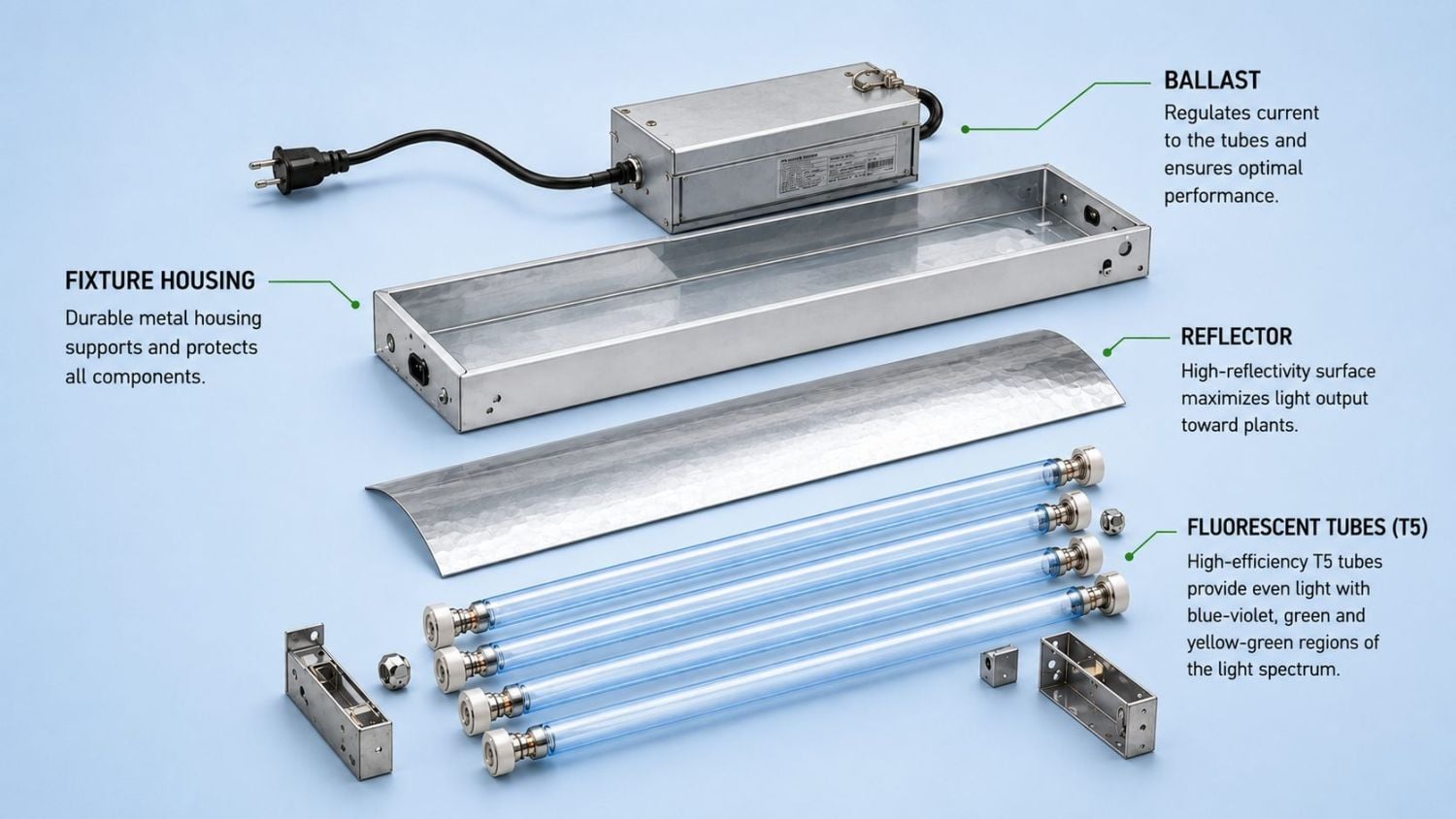
Fluorescent lights are affordable, handy, and can fit any environment. While those with high-output T5 bulbs are most common out there for small-scale growers due to the following reasons:
-
They are less expensive to set up since the bulbs, reflector, and ballast are incorporated in one package.
-
They don’t need cooling systems because they do not emit the amount of heat as an HID setup.
The major disadvantage is that fluorescent lights are inefficient, creating around 20-30% less light per watt of power consumed. On top of that, they do not provide full-spectrum lighting and generally cannot reach deep into the lower branches of the plant.
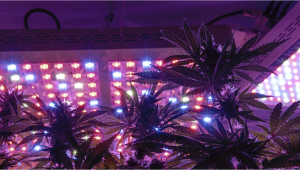
HID grow lights
High-intensity discharge (HID) lights are large bulbs that generate an intensive amount of light that is perfect for growing cannabis. HID lights are the most popular and extensively used because of the efficiency, output, and value they offer. Their price is higher than that of fluorescent and incandescent fixtures; besides, they yield additional light per unit of electricity consumed. There are two kinds of HID lamps typically used for growing:
-
Metal Halide (MH), are generally used during the vegetative phase of growth but can also be used during flowering. Their blue-ish light is ideal for vegging plants. While this will get everything done, many growers switch to another lighting alternative once the buds start to form.
-
High-Pressure Sodium (HPS), serves as a counterpart to metal halide lights. They produce a red-orange spectrum and are generally utilized during the flowering phase.
While HID lighting fixtures need a ballast and a reflector for each light, some ballasts are created for use with either MH or HPS lights. If you can’t afford both MH and HPS bulbs, begin with HPS since they provide more light per watt.
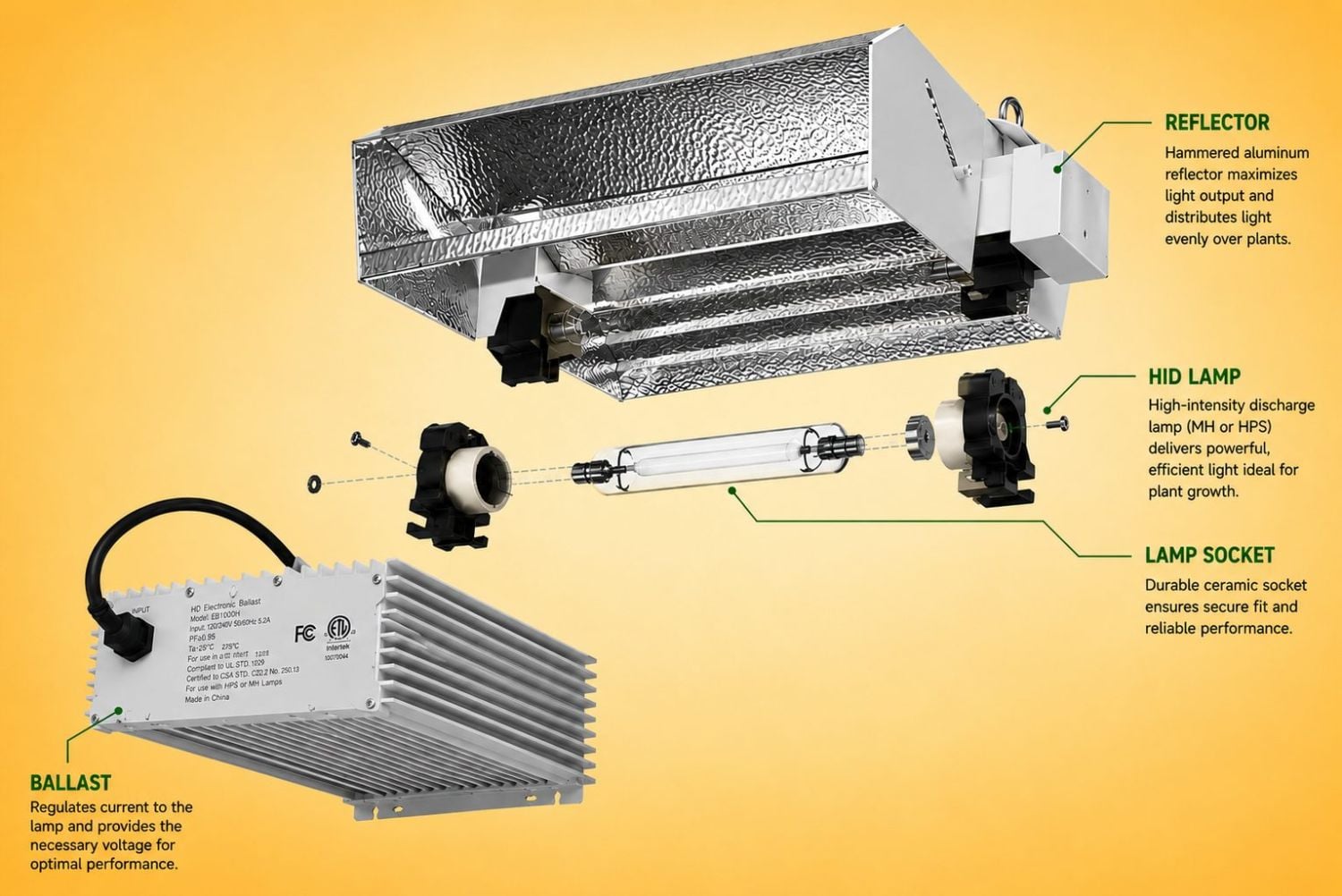
Magnetic ballasts are more affordable than digital ballasts, but they generate much heat; they are inefficient and can be harder on your bulbs. Digital ballasts are typically the best alternative of the two but more expensive.
LED grow lights
The light-emitting diode (LED) has been around for some time, but only lately has it been modified to be super-efficient, full-spectrum lighting fixtures for indoor growing. The major disadvantage of LED grow lights is the cost; they can cost ten times more than an HID setup would.
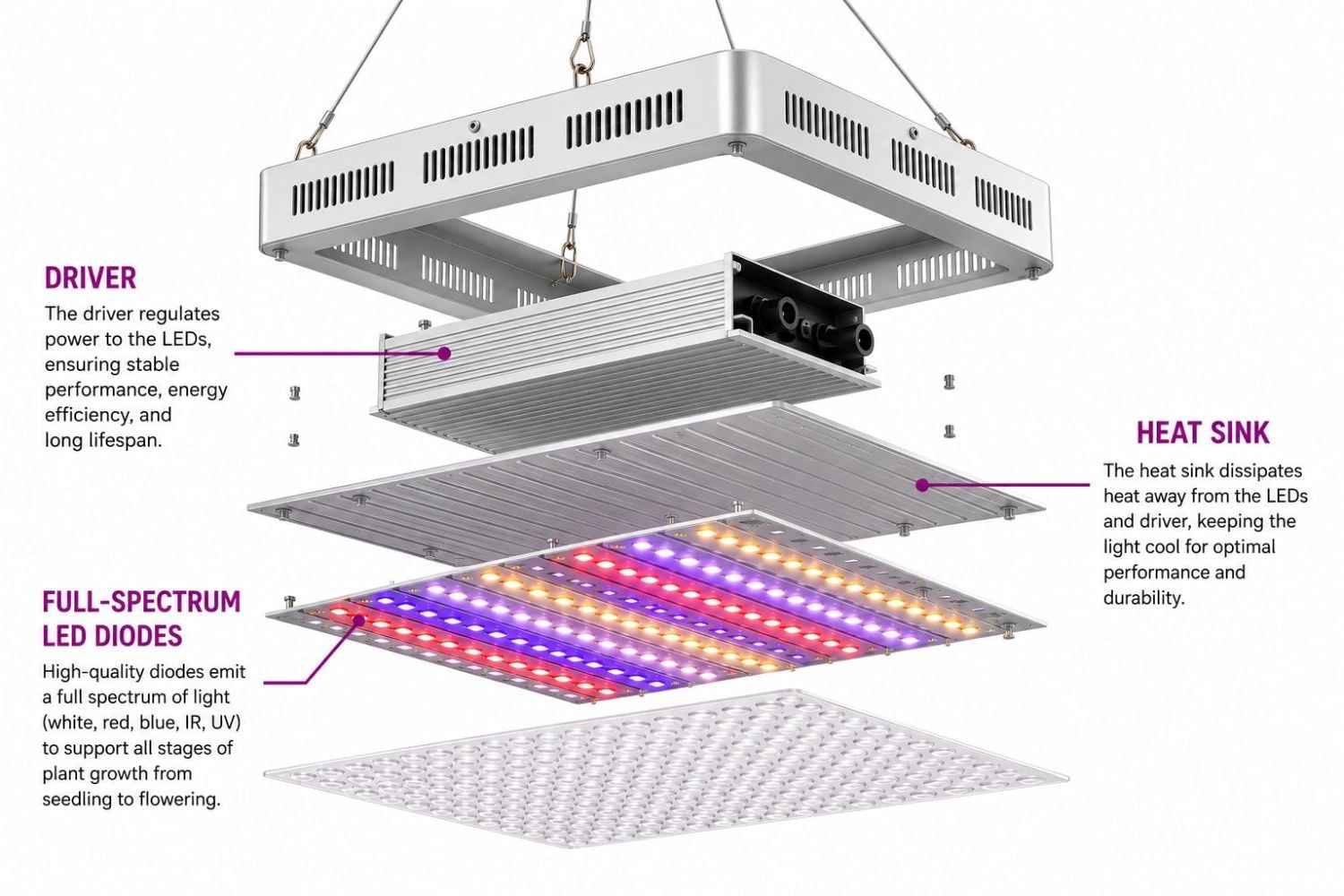
However, expensive LED grow lights can be advantageous since they're long-lasting, consume less electricity, create less heat, and generate a full spectrum of light, which can lead to bigger yields and better quality.
Step #3. Choosing the Right Genetics
As you may know, there are all kinds of cannabis seeds available online. From regular to feminized to autoflowers. By becoming familiar with different types of genetics before growing, you’ll know exactly what to expect through different stages of the growing cycle.
Therefore, you’ll have the upper hand when it comes to preparation. You’ll select the right size space, pots, lights, and other pieces of gear before you even put seeds in the soil. So it’s super important you understand what you need and what you want before ordering your seeds. So here’s a quick rundown on the different types of seeds available:
Regular Cannabis Seeds
Regular cannabis seeds are seeds that can grow into male or female cannabis plants. The difference between males and females is that female flowers produce the buds we all enjoy while male plants produce male flowers that cannot be consumed but produce pollen which is used by breeders to produce seeds. If you’re growing for the first time, you’ll want to pause any interest you have in breeding while you learn how to successfully grow healthy plants. For now, you should avoid regular seeds, as any males that go to flower in the growing area will fertilize female buds, fill them with seeds, and reduce their quality.
Autoflower Cannabis Seeds
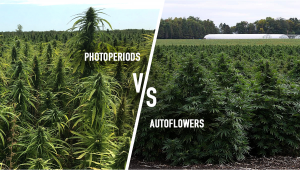
And finally, autoflowers. Autoflowering strains can also be regular or feminized, but the main characteristic of autoflowers is that, unlike photoperiodic feminized or regular seeds, they do not depend on the light cycle to start flowering because they flower based on age, which makes them ideal for those who want to have several different strains in different growth stages in the same tent.
Autoflowers are also highly recommended for outdoor growers as they will grow and flower outdoors all year long, independent of the season. Despite their hardiness, make sure to always seek beginner-friendly strains such as the Strawberry Gorilla Auto for a problem-free grow cycle.
Feminized Cannabis Seeds
Feminized cannabis seeds are seeds bred to grow female, meaning that you won’t have to select males from females, as all plants will produce female flowers (aka buds). This is the type of seed that most home growers prefer as it makes your job much, much easier. This will vastly reduce the amount of time that you have to monitor your plants during the early stages of the flowering phase.
Selecting beginner-friendly strains such as the Top 10 Best Cannabis Seeds for Beginners of 2026 will not only eliminate the chances of your buds becoming fertilized, meaning you won’t find stray seeds in your flowers or have to put up with inferior quality, but also increase your chances of success on your first cycle.
Step #4. Give your cannabis plants good conditions
Cannabis plants rely on vital processes such as photosynthesis and transpiration in order to perform to their full potential. This means that maintaining temperature and humidity within range is a must. On top of that, frequent air exchange is required to prevent mold from getting in your grow space.
This means you’ll require a constant flow of air through your grow room. This can be quickly accomplished by placing an exhaust fan on the top of the room to eliminate a warm atmosphere and a filtered air inlet near the floor. Depending on the size of your cannabis grow space and the amount of heat produced by your lighting fixtures, you can determine the size of the exhaust fan you’ll need.
Some light fixtures, such as HID systems, run a ton of heat and should be installed in air-cooled reflectors, or alternatively, go for a bigger/stronger exhaust to compensate.
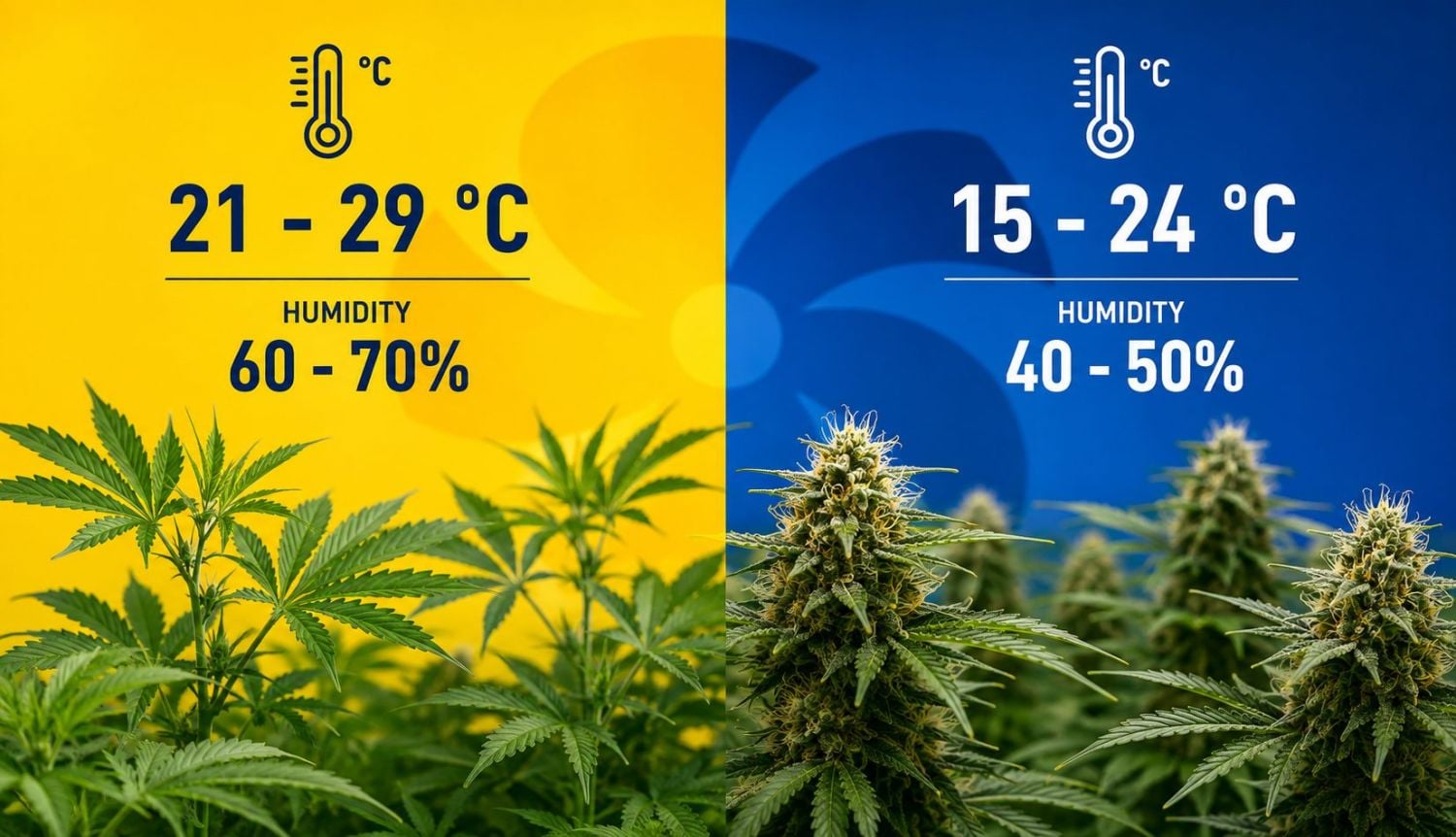
As mentioned, the environmental conditions are vital for a healthy garden, so make sure that the temperatures remain within a comfortable range for your plants:
| Vegetative | Flowering |
| 21 - 29 Celsius | 15 - 24 Celsius |
| 60 - 70% Humidity | 40 - 50% Humidity |
Keep in mind that each strains has its own preference. You may have to adjust the environmental conditions based on how the plants react, since some strains may prefer lower temperatures, while others thrive in high temperatures.
It is recommended to test your setup during the day and night to decide when it is more favorable to run your setup in terms of humidity and temperature levels, as the conditions can vary greatly depending on whether you run the lights at night or day, and the season you’re growing in. This will also let you select an ideal exhaust fan that suits your needs. And, if the cannabis smell is an issue, you can add a charcoal filter to your exhaust fan.
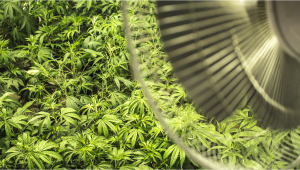
It’s a great idea to have an oscillating fan blowing a steady, light breeze in your grow space, as it helps strengthen your plant’s stems and create a less friendly environment for flying pests and mold. A wall-mounted circulating fan is ideal for this purpose, so long as you don’t position it directly at your plants or it isn't blowing too strongly, since this can cause windburn.
Growing marijuana on your own is fun. As you gain experience and knowledge as a first-time grower, you’ll change your grow room and equipment to better fit your environment, the particular strains you select, and growing techniques.
Check out part 2 of this article for more steps and get a firm cornerstone to get started on the right foot. Growing cannabis is exciting; therefore, spend time with your plants and have fun!
FAQ
Growing indoors gives you greater control over factors such as light, temperature, humidity, airflow, and nutrition. It also allows you to create a more consistent growing environment regardless of the weather outside. However, indoor growing comes with a much higher upfront cost, while growing outdoors costs a fraction of the price.
Consider how many plants you plan to grow, their expected size, and the equipment that needs to fit inside. Leaving some extra room also makes plant maintenance easier and allows for better airflow. If you think this is a hobby you’ll continue for years to come, consider going a little bigger so you have enough space to expand your garden in the future.
A basic setup generally includes a suitable growing space, grow light, pots, growing medium, exhaust + carbon filter, oscillating fan, and a hygrometer.
LED grow lights are a popular option because they are efficient, relatively easy to use, and generally produce less heat than many traditional grow lights. While they were quite costly a few years back, nowadays they are quite affordable and effective.
Ventilation helps exchange stale air for fresh air while assisting with temperature and humidity management. Combined with good air circulation, it helps maintain a uniform and overall healthier growing environment.
A carbon filter isn't necessary for plant growth itself, but it can be useful for controlling odors, especially during the flowering stage. So no, it’s not obligatory, but you should have one if cannabis smell is a problem.
An undersized system may struggle to exchange enough air, while an unnecessarily large system can increase costs and energy consumption. So, make sure to calculate how much air exchange your grow space requires. Generally speaking, multiply the length, width, and height of your tent to calculate its total volume. Then, increase that figure by around 25% to account for the additional resistance created by the carbon filter. The resulting number gives you a general idea of the minimum CFM rating to look for when choosing an exhaust fan.
Air circulation prevents stagnant pockets of humid air around the plants and contributes to a more consistent environment throughout the grow space while preventing mold issues.
Suitable conditions vary according to the plant's stage of development. Rather than maintaining exactly the same environment throughout the entire grow, conditions should be adjusted as plants grow. As a guideline, aim for 21 to 29 Celsius and 70% relative humidity during the vegetative stage, and temperatures of 15 to 22 C and a relative humidity of 50% during flower.
Focus on learning how your plants respond to their environment rather than trying to maximize results right away. Keeping your setup simple and maintaining consistent conditions will make it easier to recognize problems and understand what your plants need. It’s unlikely that you’ll achieve excellent results on your first try, so focus on observing, learning, and making the most of the experience. With each grow cycle, you’ll gain more knowledge and experience, and the quality of your harvests will gradually improve.


Comments