




Inside Our Testing Room: What Happens After Months of Breeding?
Breeding doesn’t end when a new generation of seeds is produced.
In many ways, that’s when one of the most important parts begins: testing the results.
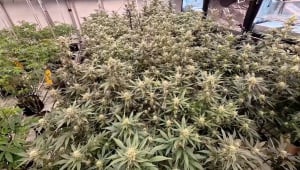
The timelapse below was recorded inside one of our testing rooms, where several of our latest autoflower breeding projects are being grown side by side.
What you’re watching may look like a simple grow cycle compressed into a few seconds. In reality, it represents around three and a half to four months of continuous observation, documentation and evaluation following months, and sometimes years, of breeding work that came before it.
From Breeding to Testing
Every breeding project starts with a direction. We may be working to improve uniformity, flowering speed, structure, vigor, color, terpene expression or another characteristic of an existing line. In other cases, we’re developing something completely new.
Those decisions can take several generations to work through.
But eventually we reach the point where we need to stop looking at what we expect the genetics to do and grow a population to see what they actually do.
That’s the purpose of these testing rooms.
Different populations are grown and observed through their complete life cycle so that we can compare the results with the objectives established during breeding.
And importantly, testing doesn’t begin at harvest.
Three to Four Months of Data
From the moment the plants begin developing, we’re already collecting information. Throughout the entire cycle, our breeding team documents how each population behaves.
We look at which plants develop faster and which are slower. We follow differences in vigor, structure and flowering speed. We observe how uniformly the population progresses and how individual plants respond when conditions aren’t absolutely perfect.
Changes in watering, environmental conditions, light intensity or other forms of stress can reveal differences that might not be visible under perfectly controlled conditions.
And that’s useful information.
A plant looking good at the end of flowering is only one small part of the picture.
We want to understand how it got there.
How quickly did it develop? How did its structure change throughout the cycle? How consistently did the population flower? Did certain individuals react differently to environmental changes? Were there characteristics appearing repeatedly across the population, or only in isolated plants?
All of these observations become part of the final evaluation.
Looking at the Population First
One of the most important things for us is not judging genetics from one exceptional plant.
A beautiful individual can make a great photograph, but it doesn’t necessarily tell you much about the consistency of a seed line.
That’s why we first look at the population as a whole.
We compare what we’re seeing with the objectives of that particular breeding project: overall consistency, development, flowering behavior, structure, vigor and the characteristics we’ve been selecting for during previous generations.
This gives us a much better picture of what the genetics are actually producing.
Only then do we move deeper into the individual plants.
Then We Go Plant by Plant
Harvest doesn’t finish the test either. Once the plants are ready, each individual can be harvested, documented and evaluated separately.
At this stage, we’re able to add characteristics that couldn’t be fully evaluated earlier in the cycle.
The plants can be compared individually, while the information collected throughout the previous months remains connected to the final result.
That combination is important.
Instead of looking only at the finished flower, we can compare the final expression with everything we already know about how that particular plant developed.
The result is a much more complete picture of both the individual and the population it came from.
Sometimes the Answer Is: Not Yet
Testing isn’t there to confirm that everything we bred is good, it’s there to tell us what actually happened.
Sometimes a population confirms exactly what we were hoping to achieve.
Sometimes we see a significant improvement, but also identify something that needs another generation of work.
And occasionally the results take the project in a direction we weren’t expecting at all.
That’s useful too.
The information collected during these tests feeds directly back into our breeding decisions: what we keep, what we change, what needs further selection and what isn’t ready to move forward.
That’s why these rooms are an important part of the breeding process.
Four Months in a Few Seconds
The timelapse makes the whole process look incredibly fast.
Plants appear, the canopy fills the room, flowering progresses and suddenly everything is ready for harvest.
In reality, behind those few seconds are months of measurements, observations and decisions, and often years of breeding work before the plants even entered this room.
We thought it was worth showing that side of the process.
Not just the final selected plant, not just the photograph that eventually appears on a strain page. The population behind it.
Because before we describe genetics, release them or decide that a breeding project is finished, we want to see what those genetics actually do.
Breed. Grow. Document. Test. Evaluate. Repeat.
Comments